• Skip to main content
  • Home
  • About
    • All
    • Donate
    • Jurisdiction Search
    • Letter Guidelines
    • OCN App
    • Privacy Policy
    • Request Event Listing
    • Sign Up for Newsletter
    • Subscribe to OCN
    • Volunteer
  • Advertise
    • All
    • Ad Layout Guidance
    • FAB Rewards Program
    • FAQs
    • Sign Up for Ad Info Emails
    • Purchase Ad Space
    • Testimonials
  • Archive
    • All
    • 2026
    • 2025
    • 2024
    • 2023
  • CALENDAR
    • All
    • Governmental Entities
    • Homeowners’ Associations
    • Special Events
    • Weekly & Monthly
  • Contact Us
  • E-Edition
  • Sitemap
  • Topics
  • SEARCH
OCN

OCN

Volunteers reporting on community issues in Monument, Palmer Lake, and the surrounding Tri-Lakes area

OCN > arts

Art Matters Columns

  • Art Matters – Is our education keeping up with visual literacy? (02/04/2026)
  • Art Matters – How Gen Z influences our cultural and financial future (12/31/2025)
  • Art Matters – Art curation: We all do it, even with holiday trees and gift wrapping (12/04/2025)
  • Art Matters – Art shapes our world—and shifts our gaze (10/30/2025)
  • Art Matters – October is Arts Month: Artober with Monumental Impact (10/01/2025)
  • Art Matters – What is art good for? (09/03/2025)
  • Art Matters – We Can’t Unchop a Tree (07/31/2025)
  • Art Matters – The many benefits of outdoor art and arts events (07/03/2025)
  • Art Matters – On being a sketchy person in the art and cultural sector (06/07/2025)
  • Art Matters – May Art Hop and art on the street (05/03/2025)
  • Art Matters – Contemporary art: The return of bold beauty (04/05/2025)
  • Art Matters – Amateur: art just for the love of it (03/01/2025)
  • Art Matters – The arts as medicine; Palmer Lake Art Group plans new venues (02/01/2025)
  • Art Matters – Art, energy sites, and hugging hormone (01/04/2025)
  • Art Matters – How does art make people feel good? (12/05/2024)
  • Art Matters – It’s not just decor: Art creates a space and creates our sense of place (11/02/2024)
  • Art Matters – October is Arts Month, aka Artober (10/05/2024)
  • Art Matters – Real local art made for real people (09/07/2024)
  • Art Matters – On the superpowers of art and daydreaming (08/03/2024)
  • Art Matters – Chautauqua: “the most American thing in America” (07/06/2024)
  • Art Matters – Spring and summer’s Art Hop: art and play (06/01/2024)
  • Art Matters – Art multiples: slabs to electronic screens; Art Hop rides again (05/04/2024)
  • Art Matters – The most beautiful investment and tax deduction (04/06/2024)
  • Art Matters – Fine art offers valuable returns (03/02/2024)
  • Art Matters – Ikigai: connecting to creative genius (02/03/2024)
  • Art Matters – Why people should live with art (01/06/2024)
  • Art Matters – Tiny worlds: miniatures, zines and their secrets in history (12/02/2023)
  • Art Matters – Enjoy our local art scene: walk, ride, or drive (11/04/2023)
  • Art Matters – October is Arts Month (10/07/2023)
  • Art Matters: Immersive art (09/02/2023)
  • Art Matters – Fine art and the making of worlds (08/05/2023)
  • Art Matters – Art Hop: an indoor-outdoor art fair with booths (07/01/2023)
  • Art Matters – Art spaces for our creative spirit (06/03/2023)
  • Art Matters – Contemporary art prints and artist handmade books (05/06/2023)
  • Art Matters – Paper mache: a high art with a long history (04/01/2023)
  • Art Matters – Artists know how to share the visible and the invisible (03/04/2023)
  • Art Matters – Valentines and the fates of flirts (02/04/2023)
  • Art Matters – Who buys art and why? (01/07/2023)

Art Matters – Is our education keeping up with visual literacy?

Highlights

  • Art is presented as a pragmatic tool for survival, solving internal problems of experience rather than just being decorative.
  • Art helps externalize unprocessed emotions—turning them into physical forms to observe and edit them, aiding emotional management.
  • Engaging with art disrupts narrative rigidity, expanding perspective and improving Theory of Mind to better navigate social conflicts.
  • Art provides meaning by imposing order on chaos, offering a rebalancing function that highlights value and supports a coherent personal growth narrative.
  • The article frames art as a catalyst for emotional resilience, empathy, and creative flexibility rather than a direct roadmap to life's challenges.
  • The main takeaway is that art moves us from passive endurance to active participation in life by shaping internal states and potential futures.

  • The Alchemical Lab: How art solves life’s intangible problems
  • The problem of emotional stagnation
  • The problem of tunnel vision
  • The problem of meaninglessness

By Janet Sellers

The Alchemical Lab: How art solves life’s intangible problems

The popular misconception of art is that it is a luxury—a decorative elective for the comfortable. However, when viewed through the lens of human psychology and history, art reveals itself as a pragmatic tool for survival. While logic and science can solve the physical problems of existence (hunger, disease, and shelter), art solves the internal problems of experience. It functions as a cognitive laboratory where we process complexity, regulate emotion, and reframe the narratives that govern our lives.

The problem of emotional stagnation

One of life’s most persistent problems is the accumulation of “unprocessed” emotion. Stress, grief, and trauma often lack a literal vocabulary, leaving individuals in a state of psychic paralysis. Art provides a mechanism for externalization. In the words of the psychoanalyst Carl Jung, “The hands will often solve a mystery that the intellect has elaborated in vain.”

By transmuting a feeling into a physical form—a melody, a canvas, a sculpture, or a stanza—we move the problem from inside the mind to the outside world. This process, often called sublimation, allows the individual to observe their pain with detachment. Once a problem is objectified as a piece of art, it becomes manageable; it can be edited, shaped, and eventually put aside.

The problem of tunnel vision

Life’s challenges often feel unsolvable because we become trapped in “narrative rigidity”—the belief that there is only one way to interpret a situation. Art acts as a disruptor of this tunnel vision. When we engage with a novel or a film, we are forced to inhabit a consciousness other than our own.

This perspective-shifting is a form of mental flexibility training. A 2013 study published in Science suggested that reading literary fiction improves “Theory of Mind”—the capacity to understand that others have beliefs and desires different from our own. By solving the “problem” of empathy through art, we become more adept at navigating social conflicts and personal biases in the real world.

The problem of meaninglessness

Perhaps the greatest life problem is the existential “void”—the feeling that life is a chaotic series of random events. Art is, fundamentally, the act of imposing order on chaos. When an artist paints or composes a symphony or a poet structures a sonnet, they are asserting that harmony can be found within noise. Philosopher Alain de Botton suggests in Art as Therapy that art serves a “rebalancing” function. It reminds us of what we value when the drudgery of daily life makes us forget. By highlighting beauty or articulating a specific truth, art provides a scaffolding for meaning, turning a series of hardships into a coherent story of growth.

Art does not provide a roadmap, but it does provide the compass. It solves life’s problems by changing the internal state of the problem-solver. It builds the emotional resilience, empathy, and creative flexibility required to face an unpredictable world. As a mirror, art shows us who we are; as a window, it shows us who we might become. In either case, it moves us from passive endurance to active participation in the human experience.

From a permanent investment to a flexible lease or a unique find, our community’s artists offer us art experiences to bring authentic creativity into our spaces.

Janet Sellers is an artist, writer, and speaker, with talks on art making, collecting, and creative strategies for artists, exhibits, and funding. Contact her for more: JanetSellers@ocn.me.

Other Art Matters articles

Art Matters – How Gen Z influences our cultural and financial future

Highlights

  • Gen Z, born 1997 to 2012, is poised to shape the future of art and culture through a preference for experiences, live engagement, and artist-led activities like workshops and gallery visits.
  • They are the art collectors of the future, blending traditional art with digital forms and even artificial intelligence, while valuing financial prudence, job stability, and purpose-driven work over impulse buying.
  • A US government report shows Gen Z and Millennials have the highest arts participation, with Gen Z particularly drawn to digital art, film and video art, and diverse collectibles, alongside buying shifts from digital platforms to traditional venues.
  • Wokewaves Magazine notes that constant digital input from platforms like YouTube, Instagram, and TikTok accelerates their creative development and broadens audience reach without traditional gatekeepers, contributing to a more online, interconnected art market.
  • Experts project the online art market to reach about $17.76 billion by 2030, fueled largely by Gen Z engagement, signaling a resilient and evolving creative landscape that benefits artists and culture alike.
  • Takeaway: Gen Z's mix of experiential values, digital fluency, and social awareness is driving a shifting art world toward new formats, platforms, and opportunities for creative expression.

By Janet Sellers

“If I were to wish for anything, I should not wish for wealth and power, but for the passionate sense of the potential for the eye which, ever young and ardent, sees the possible. Pleasure disappoints, possibility doesn’t. And what wine is so sparkling, what so fragrant, what so intoxicating, as a possibility!”

—Søren Kierkegaard

One wonders about the future of cultural expression and its direction. Our next generation of economic interests seems to rest with the up-and-coming generation, Gen Z. I found some good news for handmade arts from the National Library of Medicine: Gen Z values experiences, they enjoy visiting galleries and museums, attending a live painting session, or participating in an artist-led workshop, as these provide a sense of engagement that online interactions lack.

Gen Z are the art collectors of the future. They are the social demographic born between 1997 and 2012, in the age range now of 13-28 years old. Not just a trend but a way of life, they make their aesthetic impressions on things, including fashion, home décor, and entertainment, and brands are taking notice. You could say that more than previous generations, Gen Z prizes experiences over material possessions. Having grown up as digital natives in a world where they feel the need to be financially prudent, they are also more economically and socially prudent.

These are the ones that have grown up in a digital world and seamlessly blend traditional art forms with innovation, including digital forms and even artificial intelligence. Yet, they are socially conscious and generally hold socially progressive views, advocate for equality, and are concerned with sustainability and climate change. They value job stability, are less prone to impulse buying, and research extensively before purchasing, often preferring flexible, purpose-driven work over traditional corporate ladders.

A comprehensive U.S. government report on arts participation across generations shared detailed data showing that Gen Z and Millennials report the highest arts participation rates, both attending and creating art. Their broader generational report focused on trust, cultural engagement, community participation, and niche aesthetics for Gen Z. This understanding reveals how identity and subcultures shape artistic preferences. Younger collectors differ in interests, with Gen Z showing higher engagement in digital art, film/video art, and diverse “collectibles” compared with older generations. Survey data on where Gen Z buys art (digital platforms vs. traditional auction houses) show how this generation’s preferences differ from legacy collectors.

Wokewaves Magazine reports that this generation of creatives is consumers exposed to vast amounts of information and diverse perspectives from a young age, which accelerates their creative development. Platforms like YouTube, Instagram, and TikTok have democratized content creation, allowing Gen Z to reach global audiences and gain recognition for their talents without traditional gatekeepers. Immersion in digital culture seems to integrate creative activity into daily life more than previous generations.

Media platforms that didn’t exist a generation prior offer constant creative input and stimulation, creating a fluidity amid a wide variety of art forms, from traditional to the newest cutting-edge trends, and with the market changing into an online market. This is causing traditional markets to embrace and adapt. The projected value of the online art market is expected to reach a staggering $17.76 billion by 2030, driven largely by this generation’s engagement. They are strong and active in reshaping the creative art landscape. That sounds like good news for art, artists, and our creative cultural future.

Janet Sellers is an artist, writer, and speaker, communicating how art matters for our social, cultural, and financial well-being. Contact her at JanetSellers@ocn.me.

Other Art Matters articles

Art Matters – Art curation: We all do it, even with holiday trees and gift wrapping

By Janet Sellers

“Everyone discusses my art and pretends to understand, as if it were necessary to understand, when it is simply necessary to love.”—Claude Monet

How do we choose what we look at, live with, or give as gifts? That process—what feels right, meaningful, beautiful, or joyful—is a form of curation. Whether we’re arranging a holiday tree, selecting a painting for our wall, or wrapping a thoughtful present, we are choosing, organizing, and presenting with intention. That is curation.

Art curation is more than display—it is storytelling through materials and making experiences. It is a thoughtful arrangement that shapes how we feel about our surroundings and how others experience them. A curated space isn’t just decorated; it is expressive, layered, and emotionally resonant.

Art is communication—from maker to viewer and human to human. Every artistic choice—color, shape, texture, word, or sound—carries meaning. A painter choosing between magenta and warm red isn’t just making a visual decision; they are shaping a mood. A poet, a sculptor, a musician does the same, conveying feeling, memory, and connection through deliberate choices. When we choose art to give, or to live with, we participate in that dialogue.

Art changes a room. A space with art feels alive, personal, and engaging—rich with mood, warmth, and identity. It invites reflection, fosters connection, and adds soul to the everyday. A room without art can feel empty or overly neutral—calm perhaps, but lacking presence or character. Art doesn’t just decorate; it elevates. It can bring meaning, emotion, and even joy.

Just as museums design spaces to frame the artwork, we arrange our homes or workplaces in ways that allow our expression to shine. The room is the setting—art is the gem. The purpose of the environment is to support and enhance what we value. A thoughtfully chosen painting, sculpture, textile, or handcrafted object becomes the focal point—the treasure—around which the ambience is shaped.

We curate for comfort, celebration, memory, and belonging. Gift-giving, especially during the holidays, is a deeply human form of curation. We select what expresses our care—something beautiful, meaningful, or handmade. The wrapping, the presentation, even where we place the gift to be discovered—all are part of aesthetic intention. When we do this, we elevate a simple object into an experience.

Art helps create the spirit of a place. It shapes how we feel when we enter, how we remember it, and how we connect with others in it. Whether in a gallery, a living room, or a workspace, art invites feeling, reflection, and often, a sense of well-being.

We may not call ourselves curators, but in the choices we make—the colors we live with, the gifts we give, the stories we share—we are shaping beauty, meaning, and culture for ourselves and share that with others.

Janet Sellers is an artist, art specialist, and public speaker who shares her imaginative approach to art locally and globally. Contact her at JanetSellers@ocn.me.

Other Art Matters articles

Art Matters – Art shapes our world—and shifts our gaze

  • Does art have power?
  • How we can use art skills for problem-solving

By Janet Sellers

“Art has no rules; it is self-expressive and creative. In this way, the artwork gives a voice to those who create it. Whether designing in a traditional sense or working with alternative materials, art can be viewed as a representation of self and storyteller for places yet to be discovered.”—Rob Talley, ArtBusinessNews.com

Art can tell us about history, people, and their time. People have put their thoughts, dreams, myths, hopes, and histories in art for over 60,000 years with no words needed. The oldest known art is over 60,000 years old, created by Neanderthals. For example, painted seashells from Cueva de los Aviones in Spain have been dated to at least 115,000 years old, and cave paintings in three Spanish caves are more than 65,000 years old.

Our visual literacy and its visual impact affect our past, present, and future. We are bombarded daily by visually powerful imagery, an art form that is mostly commodified for various gains. Communication affects each of us and our conglomerate as a society, country, and world. The ubiquitous cell phone society of today reaches all lands and peoples, with the advantages and threats to go along with that reach. Even without seeing things, sounds and effects of art come into our ideas and imaginations, which can shape our actions.

Does art have power?

Does art have a deeper purpose than decoration or artifice or artifact? Ultimately, art’s ability to facilitate collective empowerment makes it a powerful tool for creating radical transformation. Art has the power to evoke emotion, open dialogue, and challenge paradigms. It can be used to inspire action, call attention to injustice, and bring visibility to issues that would otherwise remain unseen.

The impact of art on our world is undeniable; it illuminates culture and history, facilitates understanding between societies with different values, and encourages participation in social movements. When art is used as a form of activism, it can help drive change in deeply significant ways—from building solidarity among varied groups of people to giving voice to those who are systematically silenced by oppressive systems.

How we can use art skills for problem-solving

Problem-solving by doodles is an old technique. What is a doodle? It’s an absentminded scribble, and it can have powerful outcomes. Doodling helps the brain by enhancing focus, memory, and creativity, and by reducing stress. It acts as a low-level mental distraction that keeps the brain from wandering, improving concentration on a primary task like a lecture or meeting. This activity can calm the amygdala, the brain’s fear center, and the repetitive motion can induce a meditative state, absentmindedly.

Sometimes we are stuck for a solution to a problem, and creative action can help solve that. How? We can take a piece of paper and draw black lines into quarters, then in the first section, just “doodle” for 5 minutes. Then make a doodle on the second quadrant and connect those two doodles for 5 minutes. The technique includes incubating that for 5 minutes by doing something else, such as taking a walk, listening to music, or anything else, but don’t think of the problem. Often, with just these steps, solutions come to mind. Even so, there is still more room for pleasantly doodling into solutions, as it frees up cognitive resources.

Janet Sellers is an artist, writer, teacher, and speaker, specializing in creative endeavors for health through her indoor and outdoor murals, landscapes, and nature art, and offers local forest bathing hikes. Contact her at JanetSellers@ocn.me.

Other Art Matters articles

  • Art Matters – Is our education keeping up with visual literacy? (2/4/2026)
  • Art Matters – How Gen Z influences our cultural and financial future (12/31/2025)
  • Art Matters – Art curation: We all do it, even with holiday trees and gift wrapping (12/4/2025)
  • Art Matters – Art shapes our world—and shifts our gaze (10/30/2025)
  • Art Matters – October is Arts Month: Artober with Monumental Impact (10/1/2025)
  • Art Matters – What is art good for? (9/3/2025)
  • Art Matters – We Can’t Unchop a Tree (7/31/2025)
  • Art Matters – The many benefits of outdoor art and arts events (7/3/2025)
  • Art Matters – On being a sketchy person in the art and cultural sector (6/7/2025)
  • Art Matters – May Art Hop and art on the street (5/3/2025)

Art Matters – October is Arts Month: Artober with Monumental Impact

By Janet Sellers

Our summer Art Hop ended in September, but art events and activities have just begun for the fall season. October is recognized as National Arts and Humanities Month (NAHM) in the United States. It’s a national celebration to promote equitable access to the arts, increase participation, and highlight the positive impact on individuals and communities.

For some new, creative, imaginative experiences, I went to visit the new location of Monumental Impact for Technology, Engineering and Entrepreneurship (MITEE), a studio workplace for learning. It’s our local makerspace for all ages and all levels of making. The up-and-coming trend of makerspaces is an idea where a person can go to learn and use equipment they don’t already have or know how to use. One can make products or develop skills and go beyond what they already know into new developments or just new kinds of projects. Participants at MITEE design with 3D printers, metal forging, robotics and more. Volunteering for students and adults includes a wide variety of opportunities, too.

Executive Director Jeanette Breton showed me the wide variety of equipment, tools, and technology that they have and teach for people to be able to make things for themselves, gifts, or become an entrepreneur. From cosplay costumes to toys to engraving names and memories for glass sets to promotional items, there are many ways to learn and use the wide variety of tools there. I saw finished projects of all sizes: engraved drinking glasses, laser wood engraving, refined 3D printing for toys, chess sets, cosplay helmets, and tools. People of all ages go to the makerspace and are learning to make things using technology and hand-building. I was surprised to see that copper and other metals can be used in the 3D printer, and there is a laser device that will incise designs and patterns into wood.

Besides current tech introductions and learning workshops at our local Silver Key at Tri-Lakes Activity Center and throughout our Pikes Peak Library District, Monumental Impact offers memberships and tutoring for new workspaces.

Above: Monumental Impact is a creative maker studio. Here, Executive Director Jeanette Breton shows some of the fun projects community members have made so far this season, such as 3D printer creations, wood, metal, and glass engraving, robotics, and other innovative creations. The holiday season is approaching, and the makerspace and the various activities are open for making things. Photo by Janet Sellers.

Janet Sellers is an artist, writer, and speaker, offering talks, workshops, and art in public places for museums, communities, institutional talks, and exhibitions. Contact Janet at JanetSellers@OCN.me.

Other Art Matters articles

  • Art Matters – Is our education keeping up with visual literacy? (2/4/2026)
  • Art Matters – How Gen Z influences our cultural and financial future (12/31/2025)
  • Art Matters – Art curation: We all do it, even with holiday trees and gift wrapping (12/4/2025)
  • Art Matters – Art shapes our world—and shifts our gaze (10/30/2025)
  • Art Matters – October is Arts Month: Artober with Monumental Impact (10/1/2025)
  • Art Matters – What is art good for? (9/3/2025)
  • Art Matters – We Can’t Unchop a Tree (7/31/2025)
  • Art Matters – The many benefits of outdoor art and arts events (7/3/2025)
  • Art Matters – On being a sketchy person in the art and cultural sector (6/7/2025)
  • Art Matters – May Art Hop and art on the street (5/3/2025)

Art Matters – What is art good for?

By Janet Sellers

“Drawing helps you see what you cannot imagine and imagine what you cannot see.”—Richard T. Scott, American painter and writer

Making art, particularly in a group setting, fosters creativity and social connection by providing a safe space for expression, sharing diverse perspectives, and building a sense of community. This dynamic process allows participants to overcome creative blocks and feel more connected to others. Also, drawing and art-making is just plain fun, especially in the case of a class with a supportive and creative teacher. Our creative inspirations, when supported, offer us immeasurable feelings of well-being and upliftment.

Tech companies like Google use art in the workplace as a “transformative vehicle” to encourage creative thinking and foster conversation among employees. By featuring vibrant and innovative artistic expressions in its physical spaces, Google mirrors the cutting-edge, forward-thinking nature of its technology.

Google actively seeks out well-rounded individuals who can offer creative skills and fresh perspectives beyond just technical expertise. This is part of the company’s hiring philosophy, which values “Googleyness”—traits like creativity, collaboration, and adaptability—just as highly as it does raw technical skills.

In addition to technical and role-specific knowledge, Google assesses candidates for “Googleyness” or cultural fit. This includes personal qualities like intellectual curiosity, creativity, and the ability to work in a collaborative and ambiguous environment. These are life-enriching qualities that drawing and art-making by hand, especially in a group setting such as an art class, help to develop.

Visual perception (sight) is the most obvious sense used for drawing, but artists do more than just see. They also interpret and organize visual information to translate it onto paper. Drawing develops observational skills. Drawing improves a person’s ability to notice and concentrate on fine details, such as subtleties in light, shadow, shape, and color. For memory encoding, drawing an object while visually inspecting it creates a more “context-rich” representation in the brain, integrating pictorial information with the motor actions needed to draw it. In today’s world, we need creative visualization to succeed.

For drawing from imagination, the brain must first create a mental image of the subject. We can proceed from fun scribbles and even determine visual meaning with imagination. Often, doodling helps us free up our creative centers for problem-solving.

Drawing and art help designers, scientists, and, of course, artists bring their imagination to a physical form. Our ideas stay in our head until we put them into a physical form and manifest them. The physical act of drawing, particularly with, say, charcoal or graphite but also with a pen, creates a neurological connection that uses not only the mind but the hands, the eyes, and more.

Drawing relies on a multisensory and whole-brain effort, engaging the visual system, tactile senses, and internal awareness of the body’s position in space. Neurologically, this complex activity activates a network of brain regions, including the visual cortex, motor cortex, and areas responsible for memory and problem-solving.

Janet Sellers is an artist, writer, and speaker, offering talks, workshops, and art in public places for museums, communities, and institutional talks and exhibitions. Contact Janet at JanetSellers@OCN.me.

Other Art Matters articles

  • Art Matters – Is our education keeping up with visual literacy? (2/4/2026)
  • Art Matters – How Gen Z influences our cultural and financial future (12/31/2025)
  • Art Matters – Art curation: We all do it, even with holiday trees and gift wrapping (12/4/2025)
  • Art Matters – Art shapes our world—and shifts our gaze (10/30/2025)
  • Art Matters – October is Arts Month: Artober with Monumental Impact (10/1/2025)
  • Art Matters – What is art good for? (9/3/2025)
  • Art Matters – We Can’t Unchop a Tree (7/31/2025)
  • Art Matters – The many benefits of outdoor art and arts events (7/3/2025)
  • Art Matters – On being a sketchy person in the art and cultural sector (6/7/2025)
  • Art Matters – May Art Hop and art on the street (5/3/2025)

Art Matters – We Can’t Unchop a Tree

By Janet Sellers

Art is not passive documentation; it is a form of creative action. We can use art as a tool for ecological storytelling to foster not only beauty and upliftment, but also awareness and our future well-being.

Maya Lin, designer of the Vietnam Veterans Memorial, powerfully explores this through her project What Is Missing?, which awakens ecological awareness where we feel it most—our own cities and towns. She demonstrates, for example, how quickly beloved green spaces could be destroyed: Central Park, New York—in nine minutes; Hyde Park, London—in four minutes; Ueno Park, Tokyo—in two. Her work asks a vital question: how quickly would we act to stop deforestation if it happened where we live?

Every minute, 90 acres of rainforest are destroyed. Lin’s multimedia and mixed media installations mourn this ecological loss while documenting vanishing species and habitats. Her work doesn’t simply inform—it compels. It helps viewers confront ecological grief, spurs personal responsibility, and brings visibility to losses they may never have seen before. With art as a bridge, people gain awareness—and with awareness, they gain agency.

Through dramatic visuals and fact-based storytelling, Lin’s project builds emotional connection. As she explains: “What Is Missing is my fifth and last memorial. It focuses attention on species and places that have gone extinct or will most likely disappear within our lifetime if we do not act to protect them. The project exists formally as both permanent sculptures and temporary media exhibits; but it also exists virtually—as a website, whatismissing.net, which acts as a nexus for the entire project.”

Ecological art also invites participatory engagement. Mel Chin’s Revival Field (1991) used plants to extract heavy metals from contaminated soil, combining art and science in a living laboratory. This form of “art-as-remediation” transforms passive observation into a call to action, offering imaginative solutions rooted in ecological processes.

Contemporary eco-artists often draw from Indigenous knowledge systems that understand the Earth as animate and interconnected. As Robin Wall Kimmerer writes, “To be native to a place we must learn to speak its language” (Braiding Sweetgrass, 2013). Artists working in this tradition become translators—revealing hidden ecological relationships and restoring cultural memory.

Ecological art is not a retreat into aestheticism but a frontline practice of resilience. It awakens ethical consciousness, mobilizes communities, and asserts the rights of future generations and non-human kin. Far from passive, art acts. Through imaginative intervention and embodied storytelling, art becomes a living force in ecological movements. It offers new ways of seeing and belonging—reminding us that to tell the story of the Earth is not to stand apart from it, but to join its voice.

Here in our area, we have local celebrations and local awareness of our land and of art as living forces. On Aug 3 we’ll complete the Palmer Lake Chautauqua, and the monthly Art Hop is Aug. 22. Our Hummingbird Festival, on Aug. 22-23, centers on the four Colorado hummingbirds through art, talks, and fun. The Hummingbird Festival celebrates the land, pollinators and our community as contributors to our cultural future. It is located at the historic Jackson Ranch, 17435 Rollercoaster Road, Monument.

Janet Sellers is an artist, writer, and speaker creating art for homes, institutions, and public spaces. Contact her at JanetSellers@ocn.me.

For more information on Cultural Creativity see www.culturaladaptations.com

Other Art Matters articles

  • Art Matters – Is our education keeping up with visual literacy? (2/4/2026)
  • Art Matters – How Gen Z influences our cultural and financial future (12/31/2025)
  • Art Matters – Art curation: We all do it, even with holiday trees and gift wrapping (12/4/2025)
  • Art Matters – Art shapes our world—and shifts our gaze (10/30/2025)
  • Art Matters – October is Arts Month: Artober with Monumental Impact (10/1/2025)
  • Art Matters – What is art good for? (9/3/2025)
  • Art Matters – We Can’t Unchop a Tree (7/31/2025)
  • Art Matters – The many benefits of outdoor art and arts events (7/3/2025)
  • Art Matters – On being a sketchy person in the art and cultural sector (6/7/2025)
  • Art Matters – May Art Hop and art on the street (5/3/2025)

Art Matters – The many benefits of outdoor art and arts events

By Janet Sellers

Public art creates stronger communities and can even help save lives.

Our local monthly Art Hop gives us the chance to make our community a fun place to live and connect with neighbors and visitors. On the fourth Friday of the month, 5-7 p.m., May through September, our Art Hop is a time to be in town and mingle with friends and visitors for hours of art and refreshment. Besides the sculpture park seen from Second Street, there are always numerous sculptures around town at the Monument Town Hall, along Beacon Lite Road and along the Santa Fe Trail and many other places in town. These are visible all the time, too.

Art in public places fosters connection, shared identity, and dialogue, turning spaces into gathering points. It can reduce isolation, inspire hope, and spark critical conversations about social issues. By humanizing environments and promoting inclusion, public art can strengthen communities, improve mental health, and even help prevent violence or despair.

Through art in public places, the way-faring and calming effects of having public art offer intriguing, powerful impacts for public safety and pride of place, especially in placemaking. Art in Public Places is a moniker for artworks available for the public to view outdoors or indoors. These often show diversity in style, imagery, materials, and techniques. Art in Public Places as a genre has a goal to merge the art experience into public spaces.

The art in public places’ official source for the Town of Monument is known as ArtSites, and we can download a phone application that informs about each artwork. The app is called Otocast and in the narrated audio guide, each artist tells in their own words about their artwork: https://app.otocast.com/guide/MonumentCO_ArtSites.

The ArtSites for the Town of Monument makes a call for artists each year, and a jury decides on the winners to be exhibited that year throughout the area. This year in June, new sculptures were installed and can be seen at the Monument Town Hall, along the Santa Fe Trail route as well as in the Sculpture Park lawns at Second and Jefferson Streets.

Many states, counties, cities, and towns mandate capital construction and renovation funds, usually 1% of those funds. For example, in Colorado, the “1% for Art” program, officially the Art in Public Places program, allocates 1% of state capital construction funds for new or renovated state buildings toward the acquisition of public art. This program, administered by Colorado Creative Industries, ensures that public spaces are enhanced with art and aims to support artists and enrich communities. Denver, Boulder and other cities also have their own “1% for Art” programs, which dedicate a portion of city-funded capital improvement projects to public art.

The benefits of the state and local programs provide access to art for all, activate public spaces, grow civic pride, and support artists, especially local artists. Art in public places offers a human scale to larger spaces, invites experiences and interactivity for people walking, illustrates or reflects a story or history of the place, and improves wayfinding. The qr code shown here goes to the link for Otocast and the stories of the artworks narrated by the artists themselves.

Janet Sellers is an artist, writer and speaker, offering talks, workshops, and art in public places for Colorado museums and communities. Contact Janet at JanetSellers@OCN.me.

Other Art Matters articles

  • Art Matters – Is our education keeping up with visual literacy? (2/4/2026)
  • Art Matters – How Gen Z influences our cultural and financial future (12/31/2025)
  • Art Matters – Art curation: We all do it, even with holiday trees and gift wrapping (12/4/2025)
  • Art Matters – Art shapes our world—and shifts our gaze (10/30/2025)
  • Art Matters – October is Arts Month: Artober with Monumental Impact (10/1/2025)
  • Art Matters – What is art good for? (9/3/2025)
  • Art Matters – We Can’t Unchop a Tree (7/31/2025)
  • Art Matters – The many benefits of outdoor art and arts events (7/3/2025)
  • Art Matters – On being a sketchy person in the art and cultural sector (6/7/2025)
  • Art Matters – May Art Hop and art on the street (5/3/2025)

Art Matters – On being a sketchy person in the art and cultural sector

By Janet Sellers

“Art in schools shouldn’t be sidelined… it should be right there right up in the front because I think art teaches you to deal with the world around you. It is the oxygen that makes all the other subjects breathe.”

—Alan Parker, filmmaker

Much of art learning includes sketching, the ability to draw out ideas visually. Sketching is integral to design, painting, sculpture, architecture—almost all creative visual efforts—and even includes movies and town planning. As an artist, I support being a sketchy person in that creative vein. And being an artist is integral to the trillion-dollar economy of the art and cultural sector. That sector grew more than twice the rate of the total economy between 2022 and 2023, according to new data from the Arts and Cultural Production Satellite Account (ACPSA), a product of the National Endowment for the Arts and the Bureau of Economic Analysis (BEA).

Studying and seeing art helps us generate new ideas and connect disparate concepts, unlocking ideas and innovations that can be brought to fruition in the material world. With art study and going out to appreciate art in the real world, we activate our “novelty brain” for creative potential and problem solving. Using fine motor skills in art creation, we activate many areas of our brain—our internal antenna—to make connections, find and solve creative problems, and apply the solutions to real-world problems. This has also been found to improve human performance all around, including academic performance and much more.

The stamped-in learning model of STEM is seeing an exploding industry interest (think: Google and Alphabet Inc.) for very creative science, technology, engineering, art, and math (STEaM) creatives for user experience (UX). Google and Alphabet focus their creative labs on pushing creative boundaries and exploring new ideas.

This team includes roles like Creative Technologist, Visual Designer, and Social Creative/Copywriter. They use Creative Technology and Development to combine creativity with technical skills to prototype interactive experiences and explore new technologies. Building Google’s brand involves creating engaging content that reflects its core values and mission.

Our area is home to myriad artists and art opportunities that include arts events such as art fairs, classes, and art groups. Our monthly Friday Art Hops (the next one is June 27) are one source of art exposure, and coming up this summer there will be more with our local Chautauqua, the Hummingbird Festival of Arts, and other events with the Palmer Lake Arts Council. Stay tuned with the Our Community News calendar section for events, updates, and calls for artists.

Janet Sellers is an artist, writer, and speaker, offering talks, workshops, and art in public places for Colorado museums and communities. Contact Janet at JanetSellers@OCN.me.

Other Art Matters articles

  • Art Matters – Is our education keeping up with visual literacy? (2/4/2026)
  • Art Matters – How Gen Z influences our cultural and financial future (12/31/2025)
  • Art Matters – Art curation: We all do it, even with holiday trees and gift wrapping (12/4/2025)
  • Art Matters – Art shapes our world—and shifts our gaze (10/30/2025)
  • Art Matters – October is Arts Month: Artober with Monumental Impact (10/1/2025)
  • Art Matters – What is art good for? (9/3/2025)
  • Art Matters – We Can’t Unchop a Tree (7/31/2025)
  • Art Matters – The many benefits of outdoor art and arts events (7/3/2025)
  • Art Matters – On being a sketchy person in the art and cultural sector (6/7/2025)
  • Art Matters – May Art Hop and art on the street (5/3/2025)

Art Matters – May Art Hop and art on the street

By Janet Sellers

May gives us sun, rain, and snow. We also get our very own art evenings in Downtown Monument. Our community-friendly annual art season is a great way to bring family, guests, and friends to town for a casual evening. Everybody needs some art and fun in the summer—let’s start by bringing home the art finds. Real art lasts for life and makes wonderful gifts and souvenirs of fun summer memories.

Our Art Hop season kicks off on May 23, 5-8 p.m. It’s our monthly event on fourth Fridays, May through September. The convivial event includes local art, shopping, food trucks and family fun in Downtown Monument. We walk through town, taking in the sculpture park, visiting friends old and new, and adding a playful note to our summer evenings.

This season looks to offer a variety of themes and unconventional art venues to invigorate our creative sights and sounds for artists and our community. Artworks, artists, and art demonstrations as well as ephemeral street chalk art are things that will be offered over the season. You might see optical illusions and 3D effects like false holes in the ground, a river of water, or creatures popping out of the pavement, so show up and see what’s in store each time.

Local art galleries including Bella Art and Frame Gallery and Jefferson Studios will have their May art exhibits on view. New to the Jefferson Studios art venue is the log cabin gallery, along with the Chapel Art Gallery and the Open Studio venues. Around town, shops and sidewalks will host artists for the evening, often with demonstration artists, all amid the live music and family fun to enjoy.

Each Art Hop event offers a unique theme and set of activities, providing a fresh experience every month. For instance, the event on May 23 will feature an outdoor sound bath, local artists, and craft vendors at Faery Grove at 251 Front St. Ste. 4.

Janet Sellers is an artist, writer and speaker, offering art, workshops, cultural talks, and local mindful forest walks for all ages. Contact her to find out more at JanetSellers@ocn.me.

Other Art Matters articles

  • Art Matters – Is our education keeping up with visual literacy? (2/4/2026)
  • Art Matters – How Gen Z influences our cultural and financial future (12/31/2025)
  • Art Matters – Art curation: We all do it, even with holiday trees and gift wrapping (12/4/2025)
  • Art Matters – Art shapes our world—and shifts our gaze (10/30/2025)
  • Art Matters – October is Arts Month: Artober with Monumental Impact (10/1/2025)
  • Art Matters – What is art good for? (9/3/2025)
  • Art Matters – We Can’t Unchop a Tree (7/31/2025)
  • Art Matters – The many benefits of outdoor art and arts events (7/3/2025)
  • Art Matters – On being a sketchy person in the art and cultural sector (6/7/2025)
  • Art Matters – May Art Hop and art on the street (5/3/2025)

Art Matters – Contemporary art: The return of bold beauty

  • A reflection of the maker
  • Artistic autonomy: a chosen beauty

By Janet Sellers

“What any true painting touches is an absence—an absence of which without the painting, we might be unaware. And that would be our loss.” —John Berger, The Shape of a Pocket

Art appreciation is subjective. One person may see beauty in the sunrise, a blade of grass, or glistening drops of dew on a spider web. Another may ignore these and go about their day unaware of small splendors. A key factor in all of this is awareness and the moment of awareness; art may reach one person and not another. The close inspection of the bark of a tree holds an abstract beauty without us ever seeing the whole tree. Likewise, the splashes of paint on a canvas may inspire thoughts of energy, excitement, and freedom.

In The Shape of a Pocket, art critic John Berger wrote about painters like Rembrandt, Van Gogh, and Francis Bacon, as well as lesser-known or anonymous artists, emphasizing how their works capture the struggles and dignity of everyday people. Throughout, Berger’s writing reinforces a belief in art’s power to connect people across time and space.

A reflection of the maker

Contemporary art has long been considered a reflection of the artist instead of a reflection of who paid for it to be made, as was the case in Renaissance patronage. The decline of aristocratic patronage after revolutions (French and American) led artists to find new ways to sell their work. Salon exhibitions and art dealers emerged, helping independent artists gain recognition. The Impressionists (late 19th century) painted modern life—cafés, streets, and leisure—breaking from historical and religious subjects.

With Modernism and Abstract Expressionism, artists became completely independent, exploring personal and social themes. Galleries, collectors, and museums replaced churches and monarchs as the primary buyers of art.

Contemporary art often grapples with complex social, political, and cultural issues, reflecting the diverse and rapidly evolving world we live in. In contemporary art, ideas often matter more than technical skill and focus on meaning rather than imitating reality. Art questions and critiques reality, and even distorts it. Our world is reflected in many kinds of art, expressing contrasts of beauty, chaos, environmental issues, and even digital culture.

Artistic autonomy: a chosen beauty

Art market interests have begun a return to art as beauty and refreshment. Perhaps now, in contemporary art, instead of portraying what has been paid for by a controlling hierarchy, be it religion, governments, advertising and money, art as a true human expression is making its return. Art materials are easily obtained, and anyone with a pencil or brush can make something and exhibit it.

Many artists are embracing vivid colors, organic forms, and detailed craftsmanship again, balancing abstraction with recognizable beauty in dreamlike landscapes and soft, emotional portraits, or using light and space to create immersive experiences. Beauty is making a comeback, in bold, fluid and perhaps even unsettling ways.

Janet Sellers is an artist, writer, educator, and speaker and offers local forest meditation hikes. Contact her at
janetsellers@ocn.me
.

Other Art Matters articles

  • Art Matters – Is our education keeping up with visual literacy? (2/4/2026)
  • Art Matters – How Gen Z influences our cultural and financial future (12/31/2025)
  • Art Matters – Art curation: We all do it, even with holiday trees and gift wrapping (12/4/2025)
  • Art Matters – Art shapes our world—and shifts our gaze (10/30/2025)
  • Art Matters – October is Arts Month: Artober with Monumental Impact (10/1/2025)
  • Art Matters – What is art good for? (9/3/2025)
  • Art Matters – We Can’t Unchop a Tree (7/31/2025)
  • Art Matters – The many benefits of outdoor art and arts events (7/3/2025)
  • Art Matters – On being a sketchy person in the art and cultural sector (6/7/2025)
  • Art Matters – May Art Hop and art on the street (5/3/2025)

Art Matters – Amateur: art just for the love of it

By Janet Sellers

“Every artist was first an amateur.”—Ralph Waldo Emerson

Amateur is a word from the late 18th century, from French, from Italian amatore, from Latin amator “lover,” from amare “to love.” A person that does something for the love of it is an amateur. What a wonderful and happy moniker!

In art, an amateur can challenge what art could or should be without the constraints of professional norms and create outside the mainstream, the orthodox, and the conventional. It is a freedom deeply connected to personal fulfillment. It also allows an artist to be authentic and adventuresome, since there are no trends or expectations placed upon them, and offers a freedom of play and exploration not often available to professional artists who often must keep their art tied to its commodification, for its buying and selling value. And often professional artists face public scrutiny for their lives and art that an amateur will never have to consider.

Art for human expression has made its art path from ceremony to religion to historical record and commodity. This traces human creative history, useful technologies, and commerce. Some of our most profound discoveries and pleasures arise from the love of doing something fulfilling in many fields.

We humans have been making art for a very long time, and it has been a central part of our culture and technical development. Even before that, when we consider the Neanderthals and modern humans are both hominids that have made art, Neanderthals created the oldest known cave paintings in the Spanish caves of La Pasiega, Maltravieso, and Ardales. The paintings date back at least 64,000 years and include abstract images of animals, dots, and geometric signs. Neanderthals may have made jewelry, such as eagle talon pendants, from the Krapina Neanderthal site in Croatia. These pendants date back about 130,000 years.

What separates an amateur from a professional in the arts, and is that important? Professionals often have a deeper understanding of their medium and more developed technical skills. Formal education with an artist or in art school can offer training that might take a lifetime to acquire on one’s own. Professionals tend to have a greater output, quality, and consistency for their art, largely because it is their livelihood and career.

Importance of the professional vs. amateur depends on perspective

To be a professional in the arts can carry importance in terms of credibility, respect, and market value. The term “art professional” can carry a certain value; the professional has to keep the intended audience, intent and output (collectors, galleries, the public, art history, and even critics) in mind, whereas the amateur has the freedom to make art at will. The true value for either exists within the authenticity and commitment of the artist. But the lasting value lies within the art itself. We will protect and keep what is valuable to us and our lives. We take care of what is meaningful to us.

Janet Sellers is an artist, writer, educator, and speaker specializing in creative endeavors for health and communities through her indoor and outdoor sculptures, landscape, and nature art, and offers local forest bathing hikes. Contact her at JanetSellers@ocn.me.

Other Art Matters articles

  • Art Matters – Is our education keeping up with visual literacy? (2/4/2026)
  • Art Matters – How Gen Z influences our cultural and financial future (12/31/2025)
  • Art Matters – Art curation: We all do it, even with holiday trees and gift wrapping (12/4/2025)
  • Art Matters – Art shapes our world—and shifts our gaze (10/30/2025)
  • Art Matters – October is Arts Month: Artober with Monumental Impact (10/1/2025)
  • Art Matters – What is art good for? (9/3/2025)
  • Art Matters – We Can’t Unchop a Tree (7/31/2025)
  • Art Matters – The many benefits of outdoor art and arts events (7/3/2025)
  • Art Matters – On being a sketchy person in the art and cultural sector (6/7/2025)
  • Art Matters – May Art Hop and art on the street (5/3/2025)

Art Matters – The arts as medicine; Palmer Lake Art Group plans new venues

  • The Arts as Medicine
  • Palmer Lake Art Group announcements and Tri-Lakes Center for the Arts closure

We all can enjoy the arts. Creativity and its expression are for everyone, from the visual arts to music, poetry, writing, jewelry, religious relics, and more. Media in myriad forms are constantly being created for human expression since humans began. Our area is fortunate to have many artists and art events represented throughout the year, and preparations for these are also year-round.

The Arts as Medicine

“Thinking of the arts as medicine, arts as healing is innate… In indigenous languages in the country, to my understanding, there is no specific word for art because we live it. How do we remove these institutional silos and recognize the interconnectedness? How do we reconnect what has been disconnected? We operate in these different capacities. We’re all part of a living, connected system. We can’t segment the spirit from the body, from the being, from the community.”—Justin Huenemann, the First Peoples Fund, caucus member, the White House Domestic Policy Council and National Endowment for the Arts (NEA).

An arts and cultural event, Healing, Bridging, Thriving: A Summit on Arts and Culture in our Communities held on Jan. 30, 2024, was co-hosted by the White House Domestic Policy Council and the National Endowment for the Arts. It offered innovative insights to explore artists’ and arts organizations’ contributions that benefit communities and “invigorate physical spaces, fuel democracy, and foster equitable outcomes.”

At the summit, U.S. Surgeon General Dr. Vivek Murthy said, “… music can, in a matter of seconds, make me feel better.” He spoke from the Constitution Center in Washington, D.C., adding, “I’ve prescribed a lot of medicines as a doctor over the years. There are few I’ve seen that have that kind of extraordinary, instantaneous effect”.

Palmer Lake Art Group announcements and Tri-Lakes Center for the Arts closure

Palmer Lake Art Group (PLAG) announced a new lineup for shows and exhibits throughout 2025. In its recent newsletter it announced that in light of the Tri-Lakes Center for the Arts sale and closing, the PLAG board has been busy networking with other artist groups and exhibit locations. Commitments have been made for expanded opportunities for the members to exhibit their work in well-established locations and community events. The PLAG flagship exhibit Winter Art Show is being held at the Garden of the Gods Visitor and Nature Center in Colorado Springs. The exhibit starts on Feb. 1, and the opening reception is Friday, Feb. 7 from 3:30 to 5 p.m. at the Visitor Center, 1805 N. 30th St., Colorado Springs.

Coming up in March, we will have some updates on our local arts venues and locations, so stay tuned!

Janet Sellers is an artist, writer, teacher, and speaker specializing in creative endeavors for health and communities through her indoor and outdoor murals, landscapes, and nature art, and offers local forest bathing hikes. Contact her at JanetSellers@ocn.me

Other Art Matters articles

  • Art Matters – Is our education keeping up with visual literacy? (2/4/2026)
  • Art Matters – How Gen Z influences our cultural and financial future (12/31/2025)
  • Art Matters – Art curation: We all do it, even with holiday trees and gift wrapping (12/4/2025)
  • Art Matters – Art shapes our world—and shifts our gaze (10/30/2025)
  • Art Matters – October is Arts Month: Artober with Monumental Impact (10/1/2025)
  • Art Matters – What is art good for? (9/3/2025)
  • Art Matters – We Can’t Unchop a Tree (7/31/2025)
  • Art Matters – The many benefits of outdoor art and arts events (7/3/2025)
  • Art Matters – On being a sketchy person in the art and cultural sector (6/7/2025)
  • Art Matters – May Art Hop and art on the street (5/3/2025)

Art Matters – Art, energy sites, and hugging hormone

By Janet Sellers

Will a painting class make your date fall in love with you?

When viewing or creating art, the brain’s reward system releases oxytocin, dopamine, and serotonin, which can trigger feelings of pleasure and positivity. One study reported by Neuroscience News indicated that when couples play board games together or take a painting class with each other, their bodies release oxytocin—sometimes dubbed the “hugging hormone.” But men wielding paintbrushes released twice as much or more than the level of women painters and couples playing games, a Baylor University study has found.

Just as research has shown that art making or viewing increases the happy health hormones, research also suggests a potential link between sacred sites and increased oxytocin levels. Visiting these places can often trigger feelings of connection, belonging, and awe, which are all associated with the release of this “love hormone” in the body, potentially enhancing the spiritual experience at such locations. Creating artworks does this and is not location dependent but stimulates the levels, and the electrical and magnetic energies of sacred earth sites have the energy currents moving through them and to be accessed at these special places.

Many ancient and also modern cultures acknowledge sacred earth sites with placemaking and megalithic markers. While stories relate to these markers as art or myth, the science shows the facts involved. Whether we call them by ancient names or modern scientific monikers, the energies and benefits are still available, and we can seek and access them. That may be an additional reason for the markers, to show us where these are. Energy moves through our Earth and us and affects our well-being, offering us its benefits.

Positing a connection between art, sacred sites and health technology

Some megaliths appear as abstract formations, some appear as real-world creatures, and in Western cultures they have been considered decorative art forms or for ceremony and not related to a scientific use. But megaliths were used for astronomical observations, vital to maintain the continuity of harvest and crop. Other megalithic constructions are thought to be erected for funerary purposes, and served as individual or collective burial chambers; still others are thought to support health and healing, such as the Odin stone of Scotland, and Stonehenge of England due to its astronomical alignments.

Throughout the ages, we have been curious about the effects of these sites and the benefits of them as creative works of art that actually hold productive impacts with favorable influences for people and thereby cultures. While these impacts have been suppressed in Western cultures, indigenous cultures are more apt to avail themselves of the benefits. Modern scientific research is rediscovering some of the positive aspects of natural formations and art on human well-being as a therapeutic tool. Numerous studies have documented the positive impacts of nature exposure on various health metrics, including lowered cortisol levels, decreased blood pressure, and reduced anxiety.

We are lucky to have some amazing monoliths here in our area, such as Elephant Rock and Garden of the Gods. Elephant Rock has extraordinary and recognizable details of a mammoth or elephant, as if it were made as an intended creative work and not by chance. It could be interesting to learn more about the energies in such places. Our ancients were keenly aware and attuned to the Earth, creativity, and connectedness for well-being, and included sacred sites and sacred arts for beneficial connections.

We don’t know how they discovered sacred sites or art creation, but we have some reminders right here in Colorado. We can avail ourselves of these connections for our benefit and share them with others and our community. We can take an art class, visit our art galleries, and sign up for hikes or take a hike at the sacred places that are all around us. Sometimes a gentle walk in our pine forests is enough to restore us, too.

Janet Sellers is an artist, writer, teacher and speaker, specializing in creative endeavors for health through her indoor and outdoor murals, landscapes and nature art, and offers local forest bathing hikes. Contact her at JanetSellers@ocn.me.

Other Art Matters articles

  • Art Matters – Is our education keeping up with visual literacy? (2/4/2026)
  • Art Matters – How Gen Z influences our cultural and financial future (12/31/2025)
  • Art Matters – Art curation: We all do it, even with holiday trees and gift wrapping (12/4/2025)
  • Art Matters – Art shapes our world—and shifts our gaze (10/30/2025)
  • Art Matters – October is Arts Month: Artober with Monumental Impact (10/1/2025)
  • Art Matters – What is art good for? (9/3/2025)
  • Art Matters – We Can’t Unchop a Tree (7/31/2025)
  • Art Matters – The many benefits of outdoor art and arts events (7/3/2025)
  • Art Matters – On being a sketchy person in the art and cultural sector (6/7/2025)
  • Art Matters – May Art Hop and art on the street (5/3/2025)

Art Matters – How does art make people feel good?

By Janet Sellers

Experiencing art, whether we’re making it or consuming it, allows us to reach varying degrees of euphoria and catharsis or neutrality and inner peace. Unlike movies and music, wall art allows us to involve ourselves at our own pace and create our own personal responses and connection to the art experience. We can involve ourselves, or not, at will. Wall art allows us choice in our art experience.

When we see art we enjoy, our brain releases dopamine and endorphins, which can help us feel happy and at ease. It can help people process difficult emotions in times of emergency or challenging events. And art appreciation is something that can be improved over time simply by looking, and especially by picking up a pencil or paint brush and making a try. Research suggests that it doesn’t matter if you do a great job or just play around. The simple act of making the effort and engaging yourself to create something has a powerful effect in many ways for optimizing health and well-being.

History shows us that the arts—pictures and stories, dances, drama music and other aspects of art—are central to culture and to rituals of healing. These days, hospitals and healthcare centers are returning to the support that art gives and the ambience art offers for patients and healthcare workers.

The Americans for the Arts in Healthcare field report explains, “Arts in Healthcare is a diverse, multidisciplinary field dedicated to transforming the healthcare experience by connecting people with the power of the arts at key moments in their lives. This rapidly growing field integrates the arts, including literary, performing, and visual arts and design, into a wide variety of healthcare and community settings for therapeutic, educational, and expressive purposes.”

The field report also suggests that for students in medical and other healthcare fields, the arts can enhance their skills—improving their observational, diagnostic, and empathic abilities. It helps them to understand patients in a different way and connect with them on a more humanizing level.

The use of art and music helps reduce hospital stays, with studies showing earlier discharges among patients taking part in visual and performing arts interventions than among those not doing so. In one study, surgery or critical care patients who participated in guided imagery or had a picture of a landscape on their wall had a decreased need of narcotic pain medication relative to their counterparts and left the hospital earlier. Evaluations of art projects can link the benefits of creative expression to healing and greater wellness.

Our local art scene is still active over the winter season, especially in December, with numerous special events in town. Our local shops and artists offer many works that we can enjoy, obtain, and keep for ourselves or give as gifts. We can even buy art gift credits. These can be given as gifts for the recipient to choose some art for themselves at that venue. Let’s talk with our local art venues and artists to find out how. It’s a fun way to give, and enjoy some art while you shop.

Janet Sellers is an artist, writer, and speaker, specializing in art for health through her indoor and outdoor murals, landscapes, and nature art. Contact her at JanetSellers@ocn.me.

Other Art Matters articles

Art Matters – It’s not just decor: Art creates a space and creates our sense of place

  • Spotlight on our shops, artists, and originality
  • A venerable legacy for art in our community: Bella Art and Frame Gallery

By Janet Sellers

We walk through rooms or sit on furniture, but we take in and look at wall art, sculptures, and vases for respite, for rest, for reliance. In finalizing room design for setting the tone of where we are, we are impacted by many things, and a need for self in safety comes into play. Art can change the way a space feels to us. It is the art that defines and creates a space as it puts in the feeling and ambience where we live, work and socialize. When we think of it, art reminds us of many things that we relate with and react to, but often don’t talk about. Art is subtle and powerful.

Calm, restful art and colors support us to relax. Landscapes make a room feel larger and offer the feel of a window to the outdoors, while portraits silently make us feel watched and protected—or assaulted. Active, even strident, images or colors enliven a space for action. Words as art can dictate how one should feel. Still life artworks bring objects into the room’s experience. Even abstract art is neutral but never boring.

Spotlight on our shops, artists, and originality

November is a great month to collect art, and Small Business Saturday (Nov. 30) in our town should have some impressive options in view—so keep your eyes open for them! Our local artists, art groups, and art venues offer us ways to have art and its pleasures every day. This month, connect with them and enjoy their art, buy some art, and support the arts in your own inimitable way. Be original! Original art lets us feel alive and authentic, and we can change art around our rooms in any change of seasons or spaces.

A venerable legacy for art in our community: Bella Art and Frame Gallery

Our beloved art gallery and frame shop, Bella Art and Frame Gallery, will close in November after 27 years in our community. Famed for supporting our local art scene with art shows, art events, artists, and framing the art we all hold dear, owner Ethan Ahlstrom sent out the message recently to the artists. He explained that for health reasons, he has the business up for sale. Friends, if anyone you know wants to secure this established and treasured local art venue, urge them to do so. You know, it could be a single owner or a group effort.

Maggie Williamson, the previous owner, has been holding down the fort for the past year. She recently shared that she will be enjoying her retirement here in town. When you see her, do say hello and offer your thanks for her stalwart and loving support of the arts all these years!

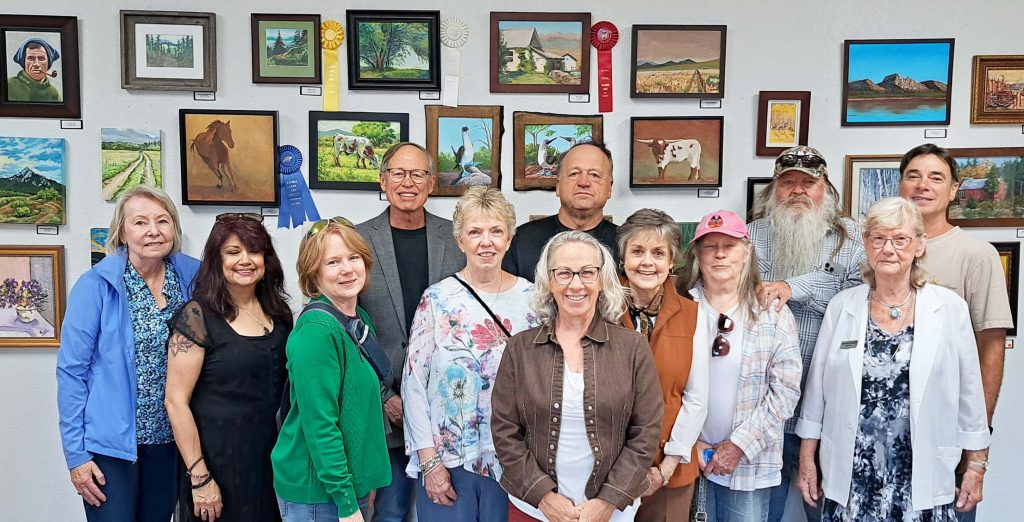
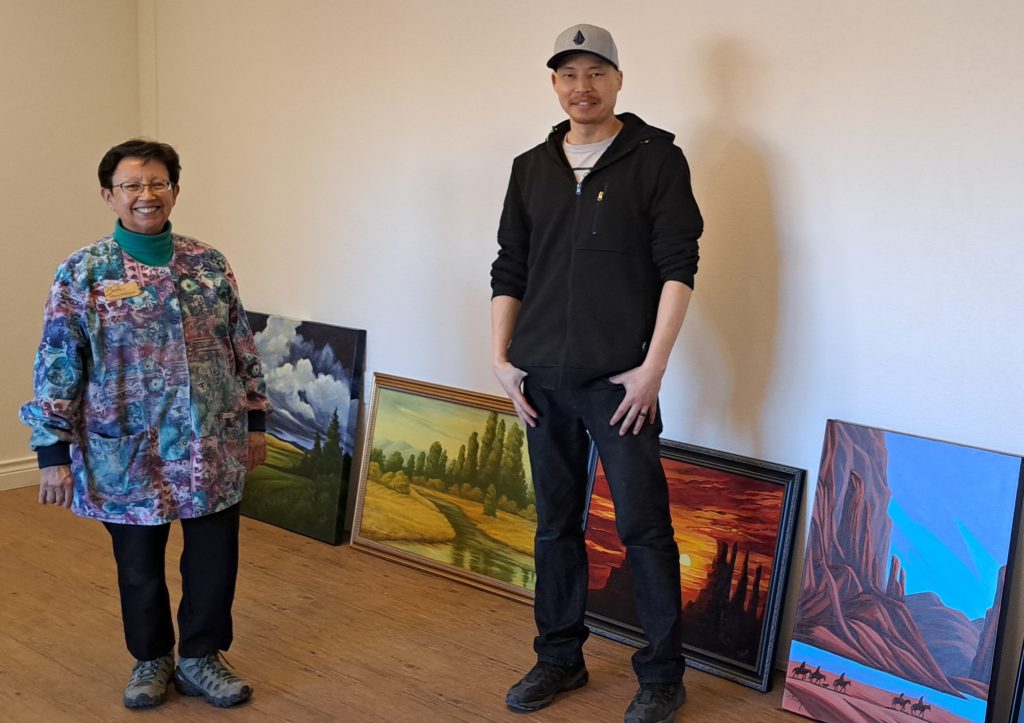
Above: On Oct. 4, the last Art Hop of the season saw the Palmer Lake Art Group open its annual Small Works show at Bella Art and Frame Gallery; this show ran through Oct. 31. Special prizes were awarded to artists for their works, and the public was invited to vote for the People’s Choice Award ribbons, which were a tie and conferred to artists Judy Martin, left, and Ermi Knoth, right. PLAG will continue its scholarship fundraising tradition of selling artist-made holiday ornaments this year at Lolley’s Tasting Room at 174 Washington St., Monument. Photo by Janet Sellers.

Janet Sellers is an artist, writer, and speaker, sharing art, design, and innovation for optimal living at every range of interest. Contact her at JanetSellers@ocn.me.

Other Art Matters articles

  • Art Matters – Is our education keeping up with visual literacy? (2/4/2026)
  • Art Matters – How Gen Z influences our cultural and financial future (12/31/2025)
  • Art Matters – Art curation: We all do it, even with holiday trees and gift wrapping (12/4/2025)
  • Art Matters – Art shapes our world—and shifts our gaze (10/30/2025)
  • Art Matters – October is Arts Month: Artober with Monumental Impact (10/1/2025)
  • Art Matters – What is art good for? (9/3/2025)
  • Art Matters – We Can’t Unchop a Tree (7/31/2025)
  • Art Matters – The many benefits of outdoor art and arts events (7/3/2025)
  • Art Matters – On being a sketchy person in the art and cultural sector (6/7/2025)
  • Art Matters – May Art Hop and art on the street (5/3/2025)

Art Matters – October is Arts Month, aka Artober

By Janet Sellers

We just finished our summer-long local art festival, Art Hop, held on the last Friday of each month from May through September. Now we’re in October, which is National Arts and Humanities Month (NAHM).

The White House and Congress, as well as many arts and cultural organizations, have recognized October as NAHM for more than 20 years. The month is celebrated with events, celebrations, and programming that highlight the arts and humanities in everyday life. Some activities involve making art; all involve enjoying art. It’s a delightful way to embrace the change of seasons and usher in holiday celebrations. For art makers of all kinds, it is the beginning of an arts season to share and sell their art and create relationships with others.

We can be creative and take a walk in the fall colors with family and friends, take photographs, or draw and paint at these times for pleasant memories we can revisit over and over. I recently was the guest artist at the Jefferson Studios’ new gallery space, the Chapel Gallery. Art Hop visitors came and went all throughout Downtown Monument. People came into the gallery, and we chatted about local art, nature, life, and more. It was delightful.

Amazingly, art can lift our spirits and create community just by being around the artworks, the artists, and sharing ideas. We create our art experiences together, and I feel strongly that we can make more of these to enjoy and benefit from throughout the year and be a reliable source of creative relationships.

In his book, Making it in the Art World, Brainard Carey explains how some artists have created their own art cycles and circles, and create wealth in the process. What is the secret the artists are doing? One of the big pieces is like any wealth creation: the reliability of the commerce relationships and the upward movement of the value as a sure thing. People like to invest or access relationships that are as positive as possible. It is as simple as creating a community around mutual kindness and thoughtfulness, which we feel with the arts. We need to continue to create and support the arts and artists so our area thrives. Art is like the flowers of a community: It brightens our days and helps us feel better.

In Colorado Springs, Arts Month is celebrated from Oct. 1-31, and of course our Tri-Lakes area is included in the Cultural Office of the Pikes Peak Region, which has a campaign for Arts Month that encourages people to “Open your world with the arts.” We can take part in local arts and art events in October. Just take a look at the Our Community News calendar in this issue for events to attend and enjoy. Local clubs and businesses can invite artists to speak and share their art and knowledge, too.

Janet Sellers is an artist, writer, and speaker with talks on art making and collecting and creative strategies for artists, exhibits, and funding with community businesses and other sources. Contact her for more: JanetSellers@ocn.me.

Other Arts articles

  • Art Matters – Is our education keeping up with visual literacy? (2/4/2026)
  • Art Matters – How Gen Z influences our cultural and financial future (12/31/2025)
  • Art Matters – Art curation: We all do it, even with holiday trees and gift wrapping (12/4/2025)
  • Art Matters – Art shapes our world—and shifts our gaze (10/30/2025)
  • Art Matters – October is Arts Month: Artober with Monumental Impact (10/1/2025)
  • Art Matters – What is art good for? (9/3/2025)
  • Art Matters – We Can’t Unchop a Tree (7/31/2025)
  • Art Matters – The many benefits of outdoor art and arts events (7/3/2025)
  • Art Matters – On being a sketchy person in the art and cultural sector (6/7/2025)
  • Art Matters – May Art Hop and art on the street (5/3/2025)

Art Matters – Real local art made for real people

By Janet Sellers

Our Art Hop in Monument and the cultural Chautauqua in Palmer Lake this summer welcomed happy visitors from nearby and across the globe. These have become favorite local summer festivals, introducing local art and artists to an ever-widening public. Art welcomes all ages and people. It’s a cultural driving force for community and a magnet for interaction and creating relationships. It’s fun to see, fun to make, and a great pleasure to own.

Per Americans for the Arts: “Communities in which residents socialize with and trust each other have higher livability scores than communities with lower social trust, and the arts are a driver in building that trust. In addition, cultural participation leads to wider community participation and to increased volunteerism and increased tolerance—all of which are key to civic engagement. It also increases involvement in local issues and projects that promote community health.”

Live, creative experiences promote well-being. We have a need for creative times and connections. Daily, we are overwhelmed with deep fake AI, but genuine interaction is refreshing. We all use the search engines routinely and try to escape the advertising robo-calls. Still, I wondered if bots pose creative ideas. I put a question to the online robot about art events and it wrote, “Art events often serve as vibrant hubs for social interaction and community-building. Art has a unique way of breaking down barriers and creating shared experiences that help build a sense of community.” Not bad, but very bland, proving my point on vitality. I wondered if the bots could write poetry or songs and got hilarious rhymes: “In oil and acrylic, secrets softly seep, From shadows deep to light that dares to leap, In corners of the world, they hang, colors dance on canvas, hues and shades twang. …” Indeed, nothing compares to original poesy in the arts by creative people made for others to buy, enjoy, and cherish.

Our local community events will continue the rest of the year, but the last Art Hop is Friday, Sept. 27. Bring your friends and your enthusiasm and buy some real art from real artists for yourself, your workplace, or the upcoming gift season, too. Let the significance of originality and creative thinking inform your choices, and let the joy of looking be a continuing pleasure for years to come. Art is one of the things we have that can increase in value, always in heartfelt and personal memories, and sometimes as investments.

Janet Sellers is an artist, writer and speaker, with talks on art making, collecting, and creative strategies for artists, exhibits, and funding. Contact her for more: JanetSellers@ocn.me.

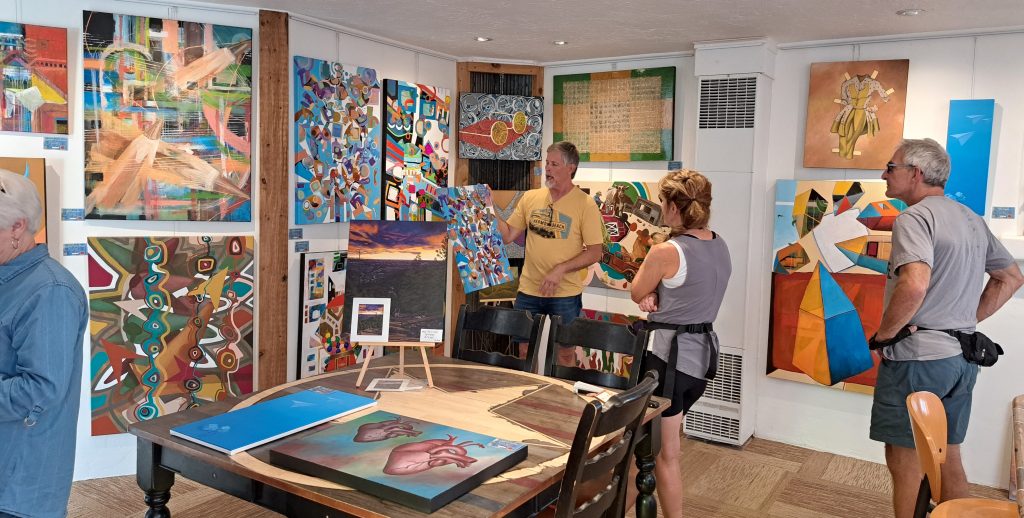
Above: The Art Hop on Friday, Aug. 23, welcomed guests at the art galleries, shops, eateries, and alfresco pop-ups around town. At his studio gallery, Jefferson Studios, local artist Daryl Muncey shares an art print made from his original painting. In his new art garden spot, Muncey showcases the work of guest artists. Photo by Janet Sellers.
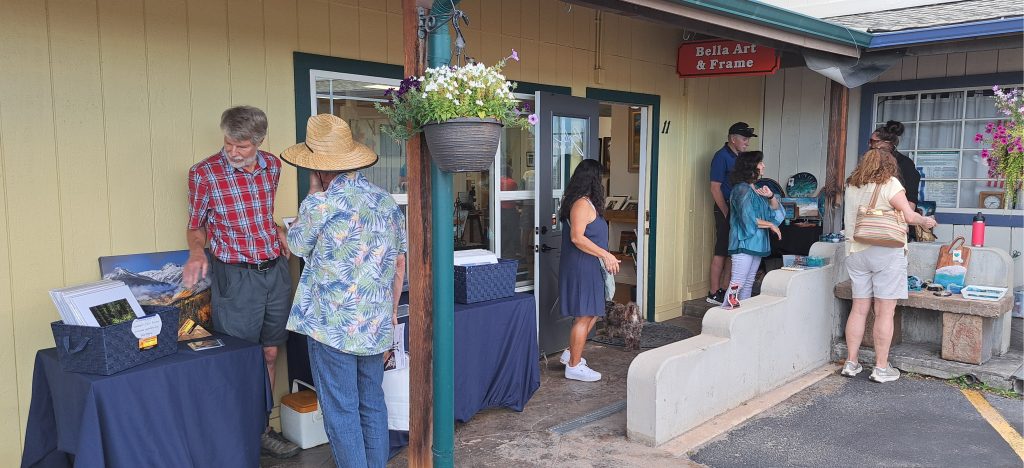
Above: At Bella Art and Frame Gallery, the member artists exhibited their works indoors while the alfresco art fair artists shared their creative works with Art Hop visitors. Photo by Janet Sellers.
[video_lightbox_youtube video_id=”ToxyF1H1QZQ&rel=0″ width=”800″ height=”450″ auto_thumb=1]

Jefferson Studios founder Daryl Muncey greeted art lovers at the August Art Hop. (32 sec)

[video_lightbox_youtube video_id=”bnLTBo8fV3g&rel=0″ width=”800″ height=”450″ auto_thumb=1]

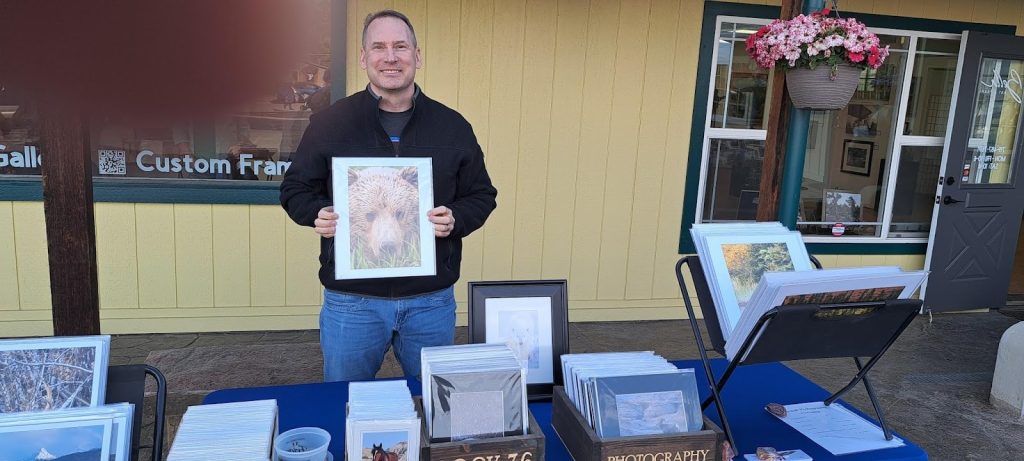
August’s featured Art Hop artist, Tom Ulmer, displayed his nature photographs at Bella Art and Frame (28 sec)

[video_lightbox_youtube video_id=”tYCbWTseue8&rel=0″ width=”800″ height=”450″ auto_thumb=1]

Faery Grove offered face painting, hair tinsel and other activities during the August Art Hop. (41 sec)

Other Art Matters articles

  • Art Matters – Is our education keeping up with visual literacy? (2/4/2026)
  • Art Matters – How Gen Z influences our cultural and financial future (12/31/2025)
  • Art Matters – Art curation: We all do it, even with holiday trees and gift wrapping (12/4/2025)
  • Art Matters – Art shapes our world—and shifts our gaze (10/30/2025)
  • Art Matters – October is Arts Month: Artober with Monumental Impact (10/1/2025)
  • Art Matters – What is art good for? (9/3/2025)
  • Art Matters – We Can’t Unchop a Tree (7/31/2025)
  • Art Matters – The many benefits of outdoor art and arts events (7/3/2025)
  • Art Matters – On being a sketchy person in the art and cultural sector (6/7/2025)
  • Art Matters – May Art Hop and art on the street (5/3/2025)

Art Matters – On the superpowers of art and daydreaming

  • Art: health and anti-aging
  • Hospital health benefits
  • Arts provide superpowers

By Janet Sellers

Our local arts scene has a lot to offer us for fun, health, and well-being—and we can take the benefits with us when we buy some art for ourselves or gifts. We have had our Chautauqua arts and culture events in Palmer Lake through Aug. 4. Our monthly Art Hop (5 to 8 p.m. on the fourth Fridays through September) is free arts and music for meandering around downtown Monument, and there are lots of art to buy and take home. Participating in the arts improves the quality of life for everyone, especially children and older adults, including cognitive function, memory, and self-esteem. On top of that, the social factors of interactive arts experiences reduce stress and isolation. And the natural sense of flow—such as when looking at art—is an element to high performance sought by athletes, entrepreneurs, musicians and artists.

Art: health and anti-aging

Participating in the arts improves the quality of life for older adults, including cognitive function, memory and self-esteem. On top of that, the social factors of interactive arts experiences reduce stress and isolation. Our dependance on science for factual information is one factor in looking at art for health, but proven methods and results in terms of the arts as medicine and intervention are factors that are being introduced for hospitals and health and for schoolchildren and military veterans. The interdisciplinary use of art, aesthetics, and science can offer relief from our current age of chronic stress, burnout, depression, and mental illness, not to mention pain management. We have complex problems now like never before. Art experiences show a way out of these and into health and longevity.

Hospital health benefits

Besides lowering costs in healthcare, interventions beyond the usual use of medicine have shown that art has a profound effect on the circuitry of the body, the brain, and thereby overall health. The University of Florida has developed a rigorous game plan for arts in medicine. The UF Health Shands Arts in Medicine has a sizable staff of artists-in-residence and creative arts therapists. They offer group workshops and bedside programs, including music in trauma care. As far back as Roman times, the use of music, drums, and other creativities were used in healing the sick. This could transform care into less use of drugs—especially addictive opioids—through mitigation of perceived pain and stress.

Arts provide superpowers

In her article for the National Laboratory for Medicine at the National Institute for Health, Your Brain on Art: The Case for Neuroaesthetics, Susan Magsamen states, “The default mode network, once associated solely with daydreaming, is now linked to many different functions core to human connection and well-being. These include personal identity, sense of meaning, empathy, imagination, and creativity as well as embodied cognition, which allows us to place ourselves in a piece of artwork and make us feel what the artist was feeling.”

Join our local community in celebrating the arts this month. The next Art Hop is Aug. 23, 5 to 8 p.m. Arrive early and enjoy the sculpture park on Second Street, have dinner and ice cream at local venues, and get some art for your life at the many pop-up art spaces and gallery venues.

Janet Sellers, an artist, writer, and speaker who makes and shares her artworks locally and nationally via galleries and writing. She gives talks on the power of art and making things. Contact her at JanetSellers@ocn.me.

Other Art Matters articles

  • Art Matters – Is our education keeping up with visual literacy? (2/4/2026)
  • Art Matters – How Gen Z influences our cultural and financial future (12/31/2025)
  • Art Matters – Art curation: We all do it, even with holiday trees and gift wrapping (12/4/2025)
  • Art Matters – Art shapes our world—and shifts our gaze (10/30/2025)
  • Art Matters – October is Arts Month: Artober with Monumental Impact (10/1/2025)
  • Art Matters – What is art good for? (9/3/2025)
  • Art Matters – We Can’t Unchop a Tree (7/31/2025)
  • Art Matters – The many benefits of outdoor art and arts events (7/3/2025)
  • Art Matters – On being a sketchy person in the art and cultural sector (6/7/2025)
  • Art Matters – May Art Hop and art on the street (5/3/2025)

Art Matters – Chautauqua: “the most American thing in America”

By Janet Sellers

Making art is a powerful tool. From finding images in the clouds above, to grabbing a pencil and doodling, to painting in a class or with a group outdoors, we are encoded from our genes to our dreams for making art. It’s encoded in our DNA for evolution and our ability to adapt. Pick up a paintbrush, grab a piece of chalk, or just visit some art at the Art Hop and the Chautauqua this month. Research shows that making or viewing and appreciating art is really good for your health, your mind and your future, as in healthy longevity. How about extending a high quality of life by as much as 10 years?

An article on CNN reported that, “The power of diverse arts practices to promote healing, well-being, and even longevity provides benefits that rank right up there with exercise, nutrition, and sleep,” as put forth by Susan Magsamen in her bestseller, co-authored with Ivy Ross, “Your Brain on Art: How the Arts Transform Us.” And Magsamen’s study published July 2019 in the National Library of Medicine, “Your Brain on Art: The Case for Neuroaesthetics,” offers fascinating details on this new and rapidly expanding field. The study reveals what art lovers have always felt, that art is the wholesome source for the “intersection of psychological aesthetics, biological mechanisms, and human evolution.”

Enjoying art makes a world of difference in our lives

We don’t need a scientific study to show we can benefit from the myriad arts whose creative frequencies guide us to a higher connection in our well-being. But scientific studies and reports do add credence to a justification for making the effort to go out and get our art fix. We’ve got the arts to enjoy right here in town at the Art Hop as an introduction to the fun and powerful way our local art scene supports us.

Besides our beloved Art Hop each fourth Friday through September, the annual Chautauqua in Palmer Lake (July 29 to Aug. 4) will give us some fine aesthetic experiences in art and live entertainment. Chautauquas (from the Haudenosaunee word with multiple meanings, including many forms of “cultural enrichment”) have been popular around the country since the 1870s, with Teddy Roosevelt once calling the traveling Chautauquas “the most American thing in America”.

Although this form of live entertainment faded with the growing popularity of radio and motion pictures, we are seeing a revival of this live entertainment genre nationwide. We feel our age-old need to socially connect, to be in a community in real life, and we’ve got hold of it now. Our local Chautauqua will offer multiple events each day at various Palmer Lake locations, for all ages. Vocal and instrumental concerts, lectures, cooking demos, daily yoga and tai chi, poetry slams, Palmer Lake Art Group-sponsored Plein Air contest, guided walks and tours, Feldenkrais classes, and more. A complete calendar of events, times, and locations is available at ChautauquaPalmerLake.org and is sponsored by Palmer Lake Arts Council.

Janet Sellers is an artist, writer and speaker, with a focus on enjoying nature and well-being. She can be reached at JanetSellers@ocn.me.

Other Art Matters articles

  • Art Matters – Is our education keeping up with visual literacy? (2/4/2026)
  • Art Matters – How Gen Z influences our cultural and financial future (12/31/2025)
  • Art Matters – Art curation: We all do it, even with holiday trees and gift wrapping (12/4/2025)
  • Art Matters – Art shapes our world—and shifts our gaze (10/30/2025)
  • Art Matters – October is Arts Month: Artober with Monumental Impact (10/1/2025)
  • Art Matters – What is art good for? (9/3/2025)
  • Art Matters – We Can’t Unchop a Tree (7/31/2025)
  • Art Matters – The many benefits of outdoor art and arts events (7/3/2025)
  • Art Matters – On being a sketchy person in the art and cultural sector (6/7/2025)
  • Art Matters – May Art Hop and art on the street (5/3/2025)

Art Matters – Spring and summer’s Art Hop: art and play

  • Good for your health
  • Addiction sneaks in to our well-being

By Janet Sellers

We had our first Art Hop on May 24. It’s a celebration of community and art in and around the shops and environs of Downtown Monument, complete with sidewalk art booths and more. Created and championed by local art legends Richard and Linda Pankratz, the annual Art Hop season has become a local favorite event each spring and summer. The event has grown from visiting art and artists at local venues to include live music around town and author book readings and signings. It’s a monthly art festival and more.

The area’s annual ArtSites public artworks, managed by the Town of Monument, hosts a permanent collection and an annual rotating exhibit that is part of the exhibit through a juried selection process. This year, the Town of Monument celebrates its new exhibiting artists with an artist reception that aligns with the downtown Art Hop on June 28.

Good for your health

Taking an evening walk is good for our health, and enjoying outdoor art and music helps create community camaraderie, all of which support optimal feelings with health benefits. Besides being in something that feels really good, there’s scientific evidence to back up the health and well-being benefits of the art!

Addiction sneaks in to our well-being

Smartphone addiction and screen addiction have crept into modern life to the extent that it is a serious mental health issue. Seemingly a simple and safe way to connect with others or keep busy, the underpinnings with the dopamine rush in games and “novelty brain” click bait marks our minds as its territory. It’s potently impressed on teens and those under 30, who have this tempting tech in their lives. The desire to connect is so powerful that addicts don’t realize what they are doing and how they are missing out on real life involvement. Screen addiction affects mental health, disrupts sleep, and causes “lazy thinkers” because generating thoughts and ideas is stifled. How this affects brain and mind development remains to be seen.

Screenagers is a term that describes our youth growing up in a screen-saturated world—a global pandemic of sorts, affecting all demographics. Dr. Delaney Ruston, a physician and film director, describes the tech-saturated world that needs balance between screen time and non-screen time in the Screenagers documentaries (and the sequels). Awareness that mere tech communication is not true human camaraderie is vital to well-being. The Screenagers movement has broadened to a myriad of educational plans and helpful actions for parents, teachers, mental and physical health practitioners, and others.

Solutions to our life balance include taking walks with others—especially family and loved ones—and being out and about with people in a safe way. Our Art Hop offers a brilliant blend of what most people like and need these days. It is the fresh outdoors, indoor venues, exercise, fun and interesting art, music and conviviality. Our shops, eateries and ice creameries are noted for the old town, friendly atmosphere. People can chat and laugh while perusing Downtown Monument in a fun and lighthearted way. The artists and artworks are accessible both to see and to purchase. Excellent artworks are offered at affordable prices, benefitting the people who enjoy the art to take back to home or office, and the artists and venues.

The next Art Hop is June 28. See you there!

Janet Sellers is an artist, writer, and speaker with a focus on enjoying nature and well-being. She can be reached at JanetSellers@ocn.me.

Other Art Matters columns

  • Art Matters – Is our education keeping up with visual literacy? (2/4/2026)
  • Art Matters – How Gen Z influences our cultural and financial future (12/31/2025)
  • Art Matters – Art curation: We all do it, even with holiday trees and gift wrapping (12/4/2025)
  • Art Matters – Art shapes our world—and shifts our gaze (10/30/2025)
  • Art Matters – October is Arts Month: Artober with Monumental Impact (10/1/2025)
  • Art Matters – What is art good for? (9/3/2025)
  • Art Matters – We Can’t Unchop a Tree (7/31/2025)
  • Art Matters – The many benefits of outdoor art and arts events (7/3/2025)
  • Art Matters – On being a sketchy person in the art and cultural sector (6/7/2025)
  • Art Matters – May Art Hop and art on the street (5/3/2025)

Art Matters – Art multiples: slabs to electronic screens; Art Hop rides again

  • Mass-made art was an innovation

By Janet Sellers

News flash: Our local Art Hop season begins in May, now 5-8 p.m. on fourth Fridays. Wander around downtown Monument for an evening of fun, art, food, and meeting up with old—and new—friends.

Today’s creative artwork and hand-painted unique apparel are here as expensive yet greatly expressive, artist-designed clothing, shoes, handbags, luggage and more—even body ink. The novel ideas and values of scarcity are coming back from the mass-produced, highly available pieces that were in demand in yesteryear. And yet:

Mass-made art was an innovation

When they started, most printing process outcomes allowed for a cheaper alternative to hand work. All were available largely to the wealthy, as most new technologies are in any age.

The Museum of Modern Art in New York City explains on its website that lithography was invented around 1796 in Germany by an otherwise unknown Bavarian playwright, Alois Senefelder, who accidentally discovered that he could duplicate his scripts by writing them in greasy crayon on slabs of easily available local limestone and then printing them with rolled-on ink. This was an easier, cheaper method compared to the earlier pen works, engravings, or etchings. Multiples via printing processes only much later became of value as art but were first related to mass, mechanical reproduction and not valued as highly as the scarcity of original handmade works.

Replication and production throughout the centuries used various flat printing methods including silk-screening, a fabric stenciling process from the Song dynasty in China that emerged around 960 A.D., then used in 1600s Japan for textiles. Japanese stencils used human hairs, with stiff brushes to apply paint. Later, silk was chosen for the stencil fabric, thus the term “silkscreen.” The Western use, in England, of this process was first patented in 1907. These processes and their artifacts hold value now because of their age and the fact that they lasted this long. They are scarce and respected artifacts of our history and our human past.

Mass production of posters in the 1960s utilized screen printing to “get the word out” in posters, signs, political protest signs, and more. The U.S. garment industry took off starting with screen printing of bowling shirts and T-shirts. Colorful printed art was right behind, thanks to Michael Vasilantone, who invented the rotary multicolored screen printing press.

I truly believe that our copy machines and other mechanical means to share our ideas and creative intent are as valuable and powerful in their time—our time—as the historic processes. We’re not going to cart around an art material that requires a forklift to use it (lithographic stone slab). We do not need to use such old methods to be aesthetically valid. We do need people to be aware of art methods embodying value regardless of how it is made. Multi-million-dollar global art fairs prove this culturally and financially every year. Even blank space is part of the art experience.

We are in the newest screen age, the electronic version, and in-hand, touchable works on paper, wood, fiber, and other surfaces are now the rarities compared to the plethora of things available on an electronic screen.

Our current art wave also embraces and craves the human touch in meaningful things. Paintings are in demand, as are sculptures and other artworks as a means for creative expression for artists to make and people to have in their lives. Reproductions are still popular, with value added via the artist that hand-signs each artwork.

Let’s meet at the Art Hop and catch up!

Janet Sellers is an artist, writer, and speaker who loves to share the beauty and fun of creative thinking in art, nature, and life. Contact her at janetsellers@ocn.me.

Other Art Matters columns

  • Art Matters – Is our education keeping up with visual literacy? (2/4/2026)
  • Art Matters – How Gen Z influences our cultural and financial future (12/31/2025)
  • Art Matters – Art curation: We all do it, even with holiday trees and gift wrapping (12/4/2025)
  • Art Matters – Art shapes our world—and shifts our gaze (10/30/2025)
  • Art Matters – October is Arts Month: Artober with Monumental Impact (10/1/2025)
  • Art Matters – What is art good for? (9/3/2025)
  • Art Matters – We Can’t Unchop a Tree (7/31/2025)
  • Art Matters – The many benefits of outdoor art and arts events (7/3/2025)
  • Art Matters – On being a sketchy person in the art and cultural sector (6/7/2025)
  • Art Matters – May Art Hop and art on the street (5/3/2025)

Art Matters – The most beautiful investment and tax deduction

  • Art to buy, lease, or rent has its benefits
  • An asset class that is fun to own

By Janet Sellers

Art to buy, lease, or rent has its benefits

We can buy art, but we can also lease or rent artworks. Sculptures and artworks lend a powerful uplift to places, especially businesses. One primary source for art leasing is the artmakers themselves. Leasing allows the prospective buyer to get a feel for the art in the place, such as a corporate building or to give a special atmosphere to a property—visitors and tenants like to feel the luxury that art brings to a place.

Museums offer art rentals, and there are art rental agreements with art collectors as well, since rental and leasing income is another way that art generates income while keeping ownership. Museums and private collectors are two ways to do this, and sometimes galleries will rent or lease artworks. Often, the temporary art rental may become a sale as well. Art dealers also allow a trial period to see if the art and collector have a good fit. This allows the renter to experience the art without the full commitment of purchasing it and benefits the artist because the artwork is out working in the world, generating income even before it is sold.

An asset class that is fun to own

As a store of wealth to grow capital over time, art is an asset class that has a potential to generate wealth, especially when viewed as long-term investments. Art is a limited, scarce resource that benefits from its scarcity. Of course, the maker of the artworks, the artist, needs to have a sales history, a track record, to show value and the potential to increase in value. As it has a fixed supply, this can drive up prices.

You can claim art as a tax deduction by demonstrating that your primary intent in owning the artwork was to generate income, as governed by IRC 212, because the art expense can be deducted as it relates to this provision—it’s an expense for production of income. Purchased for business use or corporate holdings under specific circumstances, your fine art, original works by living artists and even collectibles (Pokeman makes a comeback) could qualify. It wouldn’t work as a depreciation deduction because it doesn’t wear out, and it is an investment that can increase in value, so the cost is a key factor as well as the appreciation when sold.

Our local artists have a wide range of art for sale, some for lease or rent. Our art galleries and interior decor venues offer art all year to enjoy. Our Art Hop season begins in May. The fourth Friday of the month, just show up in downtown Monument 5-8 p.m.

Janet Sellers is a professional artist, writer, and speaker, offering fine art, informative talks, and art experiences in the Tri-Lakes region all the way to the Pacific Coast. Contact her at JanetSellers@ocn.me.

Other arts articles

  • Art Matters – Is our education keeping up with visual literacy? (2/4/2026)
  • Art Matters – How Gen Z influences our cultural and financial future (12/31/2025)
  • Art Matters – Art curation: We all do it, even with holiday trees and gift wrapping (12/4/2025)
  • Art Matters – Art shapes our world—and shifts our gaze (10/30/2025)
  • Art Matters – October is Arts Month: Artober with Monumental Impact (10/1/2025)
  • Art Matters – What is art good for? (9/3/2025)
  • Art Matters – We Can’t Unchop a Tree (7/31/2025)
  • Art Matters – The many benefits of outdoor art and arts events (7/3/2025)
  • Art Matters – On being a sketchy person in the art and cultural sector (6/7/2025)
  • Art Matters – May Art Hop and art on the street (5/3/2025)

Art Matters – Fine art offers valuable returns

By Janet Sellers

Imagination is available at all times; using it to be creative and make something is a highly developed and valued skill.

Art has an effect on viewers and collectors, and they seek to revisit the realms the artist brings as a kind of portal for them. We all experience this kind of portal idea when we read books or watch television and video games or use visual and sound media to engage with ideas and our imagination. The artist creates a pathway from our day-to-day life to the realm of imagination, bringing it to us physically from their adventures in imagination via art creation.

Art is decoration, a statement, ritual equipment, ornament, entertainment, and more. Art is the imagination made visible and tangible. We can make it ourselves, we can buy art as investment, and we can even buy fractional shares of art as investment and earn a return when the art sells.

In the last year, among the top 10 smart and safe investments with a whopping 10 percent return listed by the investment firm Lion’s Wealth Management, art is No. 4. Art is an investment to enjoy seeing every day while it creates a return. It also appreciates in value independently of other investment indexes like security indexes and inflation.

This begs the question of which level of art is investment worthy and how is that determined and discerned? Frequently, investors use the secondary art market for investment levels, and the cognoscenti (literati) invest in the primary art market. What are those?

The primary art market is the first purchase of a work and usually lower in price than when the artwork is resold, which is known as the secondary market. Artworks can be resold often, but it is likely that the collector buys the artwork because they like to see it or know they can share it via leasing or other ways for shows at museums and events.

These primary and secondary art markets are closely intertwined, and the best way for people to understand the investment value, as with any investment, is educating themselves about the art, artists and the stability of the artists’ works and the art prices. The secondary art market tends to be more stable but as in any market, the seller, be it at auction, private sale, or a gallery sale, looks to make the highest return possible. Just as in any business, an artist’s artwork sales need to go up to show confidence, stability, and profitability for investment status. Even so, art for art’s sake and art for personal pleasure are still investments to enjoy and brighten our days.

News flash! This year, our Art Hop season will change from Thursdays to Fridays and include music, food, and more. Stay tuned!

Janet Sellers is an artist, writer and speaker who makes and shares her artworks locally and nationally via galleries, writing, and talks on art and making things. Contact her at janetsellers@ocn.me.

Other Art Matters articles

  • Art Matters – Is our education keeping up with visual literacy? (2/4/2026)
  • Art Matters – How Gen Z influences our cultural and financial future (12/31/2025)
  • Art Matters – Art curation: We all do it, even with holiday trees and gift wrapping (12/4/2025)
  • Art Matters – Art shapes our world—and shifts our gaze (10/30/2025)
  • Art Matters – October is Arts Month: Artober with Monumental Impact (10/1/2025)
  • Art Matters – What is art good for? (9/3/2025)
  • Art Matters – We Can’t Unchop a Tree (7/31/2025)
  • Art Matters – The many benefits of outdoor art and arts events (7/3/2025)
  • Art Matters – On being a sketchy person in the art and cultural sector (6/7/2025)
  • Art Matters – May Art Hop and art on the street (5/3/2025)

Art Matters – Ikigai: connecting to creative genius

By Janet Sellers

The concept of humans looking for something that imbues a purpose for life is as ancient as humankind. It’s called “Ikigai” in Japanese. “Iki” means life, “gai” means result, fruit, and benefit. We can creatively look into our own Ikigai through the arts by making things, by connecting with the arts thoughtfully and by using strategies to improve our days. Research shows that our ikigai powerfully affects our health and well-being.

“It has been suggested that the practice of meditation is associated to neuroplasticity phenomena, reducing age-related brain degeneration and improving cognitive functions. Neuroimaging studies have shown that the brain connectivity changes in meditators .…” (National Library of Medicine (www.ncbi.nlm.nih.gov/pmc/articles/PMC6312586/). The study throws light on how mindfulness may play a role for preventive strategies in memory processes, particularly Alzheimer’s disease and other pathologies.

We don’t have to be an artist to be creative for improving our quality of life, but some of the tools artists use are helpful for everyone. Meditative practices have been very instrumental in creating a personal space for health and well-being. For decades, many artists and creatives in the media and film industries have used things like the workbook The Artist’s Way by Julia Cameron to create their own thoughtful framework for daily living.

When we listen to our intuition and not our inner critic, we can solve problems and of course create good things in our life at any age. In teaching The Artist’s Way for many years, I offered three shareable strategies in workshops to help people make daily creative living habits. The goal was to create a pathway to Ikigai. We all know that taking a walk for 20 minutes a day is very healthy for our bodies but it’s also healthy for our minds. The repetitive action of walking balances us and we are able to access our body and mind holistically.

Artist Pages are a form of journaling or sketch-booking that help us to clean up the clutter of our mind and put on paper thoughts and feelings instead of carrying them around in our head. It unloads a lot. After about three weeks of doing this, a person often finds they’re able to leave their concerns on the written page or sketchbook. Instead of a person merely activating hormones for “fight or flight” in their day, downloading concerns to a page prompts a creative way of thinking and problem solving.

The Artist Date is something that is known from ancient times. People need a weekly “something” planned and created to look forward to, then do it, and look back at that pleasant time for the rest of the week. This is a very healing activity that develops innovative thinking and builds neural pathways for optimizing habits and changing our lives for the better.

Janet Sellers is an artist, writer and speaker who makes and shares her artworks locally and nationally via galleries, writing, and talks on art and making things. Contact her at JanetSellers@ocn.me.

Other Art Matters articles

  • Art Matters – Is our education keeping up with visual literacy? (2/4/2026)
  • Art Matters – How Gen Z influences our cultural and financial future (12/31/2025)
  • Art Matters – Art curation: We all do it, even with holiday trees and gift wrapping (12/4/2025)
  • Art Matters – Art shapes our world—and shifts our gaze (10/30/2025)
  • Art Matters – October is Arts Month: Artober with Monumental Impact (10/1/2025)
  • Art Matters – What is art good for? (9/3/2025)
  • Art Matters – We Can’t Unchop a Tree (7/31/2025)
  • Art Matters – The many benefits of outdoor art and arts events (7/3/2025)
  • Art Matters – On being a sketchy person in the art and cultural sector (6/7/2025)
  • Art Matters – May Art Hop and art on the street (5/3/2025)

Art Matters – Why people should live with art

  • Living with art gets you beyond everyday activity.
  • Even animals make art with a purpose
  • Art as attractant and courtship display

By Janet Sellers

An artist may or may not show their work publicly. Fortunately, most artists will show and sell their creations. It is an act of sharing, and of course a strategy for attracting attention to one’s creative prowess.

Living with art gets you beyond everyday activity.

“It’s a matter of pure enjoyment, but also, living with art gives people a sensitivity, absolutely, and more feeling, more understanding,” Peter Selz, founding director of the Berkeley Art Museum, said in a recent interview for the library about the University of California at Berkeley art lending program. “Living with art gets you beyond everyday activity into a deeper world.”

Such library loans, museum loans, or rentals assemble a collection of works touched by the hand of the artist and make them available to students, which would support a meaningful extension of the university’s art teaching program. Many museums also have lending libraries of original art, and artists can offer their works in this way as well. Original art is available to live with and display, for a short while.

Even animals make art with a purpose

I recently saw a video of a puffer fish making an extraordinary sand mandala exhibition to attract a female mate. The male creates an elaborate mandala in the sand about 30 meters below the ocean surface and must maintain it carefully. A female will evaluate the structure and choose the male after evaluation and completion of other courtship behaviors. The females leave the nest but males stay and will care for the eggs and protect them until they hatch in about a week. They will chase off predators or other rival males that come to the nest. The mandala nest will deteriorate over time and won’t be used again.

Art as attractant and courtship display

The National Library of Medicine (in an article on communicative and integrative biology) reports that, “The bowerbird makes elaborate structures and decorates them with colorful objects. These are not nests. The operational definitions of art, judgment, and aesthetics suggest that great bowerbirds are artists and have an aesthetic sense. Males create art because their created bower is voluntarily viewed by females, leading to changes in their behavior up to and including courtship with the artist. Male bowerbirds have an aesthetic sense in that they have to create the bowers and forced perspective, and appear to constantly maintain and improve the bower geometry.”

Just as a male bowerbird chooses and displays its found treasures to be viewed and ascertained by his audience (female bowerbirds), so does a museum curator, who is responsible for designing displays and arranging art for exhibition. The bowerbird guards his creative display or artwork, and the museum curator is guardian of the artwork and exhibit. Both will have a voluntary audience to view and make judgments about acceptance of the works.

While these fascinating art experiences are temporary for appreciation, we can take a prompt from the phenomenon. When we like a work of art, we can get it for posterity. Some artworks are one of a kind, some are handmade prints or photographic prints in editions of specific multiples. Many artworks become family heirlooms, and some collectors’ artworks go out for a paid loan to museums for view or are sold at a profit for the collector as the artwork increases in value.

Janet Sellers is an artist, writer, and speaker. Her paintings, sculptures, and print artworks are exhibited coast to coast and locally in Colorado. Contact her at JanetSellers@ocn.me.

Other Art Matters articles

  • Art Matters – Is our education keeping up with visual literacy? (2/4/2026)
  • Art Matters – How Gen Z influences our cultural and financial future (12/31/2025)
  • Art Matters – Art curation: We all do it, even with holiday trees and gift wrapping (12/4/2025)
  • Art Matters – Art shapes our world—and shifts our gaze (10/30/2025)
  • Art Matters – October is Arts Month: Artober with Monumental Impact (10/1/2025)
  • Art Matters – What is art good for? (9/3/2025)
  • Art Matters – We Can’t Unchop a Tree (7/31/2025)
  • Art Matters – The many benefits of outdoor art and arts events (7/3/2025)
  • Art Matters – On being a sketchy person in the art and cultural sector (6/7/2025)
  • Art Matters – May Art Hop and art on the street (5/3/2025)

Art Matters – Tiny worlds: miniatures, zines and their secrets in history

By Janet Sellers

“Art is for everybody. To think that they—the public—do not appreciate art because they don’t understand it, and to continue to make art that they don’t understand and therefore become alienated from, may mean that the artist is the one who doesn’t understand or appreciate art and is thriving in this “self-proclaimed knowledge of art” that is actually … (nonsense).”—Keith Haring, Journals

Miniature paintings have a long history as art form and expression, given as gifts and kept as heirlooms. Originating from various cultures around the world, miniature creations are often characterized by their small size, intricate details, and vibrant colors. They have a rich history in various cultures, such as European, Native American, Far East, Near East, African and in many ethnic traditions. We can find these small treasures in many unexpected places around the country or the globe, so even the hunt for them is a hobby to enjoy.

The effort and attention put into these small masterpieces is significant, so don’t let their diminutive size trick you; they are worth quite a lot and are greatly appreciated worldwide. The images can be artists’ paintings or digitally made adding the human touch of artists. Miniature artist books in an artform called “Zines” are collected by many, starting with Thomas Paine’s Common Sense and Ralph Waldo Emerson’s The Dial. The Museum of Modern Art in New York has a vast collection of Zines in their archives.

In times past, miniature paintings often held secret messages or memories that could be kept near the person discreetly, often in pocket watches or lockets. Such were the secret forbidden love eye portraits of the 1700s and French Revolution eye portraits that signified allegiance to the party.

Above: “Zines,” short for magazines or fanzines (fan magazines), represent many genres of self-published, small (frequently less than 100) circulation of niche topics or art. Often tangible traces of marginalized cultural communities, Zines have cultural and academic value. An outsider literature genre since the 1700s and popularized by science-fiction fans as “zines” in 1940, the term entered the Oxford English Dictionary in 1949. Shown here is a Zine of images and poetry about culturally modified trees in the Tri-Lakes region by Janet Sellers. Photo courtesy of Janet Sellers.

Today, miniatures can reflect cultural roots, family events and traditions, or ancestral stories. Small artworks that represent places visited can be a beautiful, compact way to preserve memories or celebrate and honor a family’s heritage. They become reminders of significant moments in life, for pets and cherished places, and they become family heirlooms.

Miniature paintings can symbolize specific themes or sentiments that hold significance. A painting of a tree might represent growth and stability, a bird could symbolize freedom, or a favorite person or celebrity could stir fond memories. A cherished quote could become calligraphy. All tiny treasures can fit into spaces where larger artworks might not.

Remember that the value of a keepsake lies in the personal connection it holds. Whether one chooses people, places, abstract works or creates an eclectic mix, these small works can serve as meaningful reminders of the moments and values that matter most in the gift, and about the giver’s thoughtfulness as well.

Janet Sellers is an artist, writer and speaker. Contact her at JanetSellers@ocn.me.

Other Art Matters articles

  • Art Matters – Is our education keeping up with visual literacy? (2/4/2026)
  • Art Matters – How Gen Z influences our cultural and financial future (12/31/2025)
  • Art Matters – Art curation: We all do it, even with holiday trees and gift wrapping (12/4/2025)
  • Art Matters – Art shapes our world—and shifts our gaze (10/30/2025)
  • Art Matters – October is Arts Month: Artober with Monumental Impact (10/1/2025)
  • Art Matters – What is art good for? (9/3/2025)
  • Art Matters – We Can’t Unchop a Tree (7/31/2025)
  • Art Matters – The many benefits of outdoor art and arts events (7/3/2025)
  • Art Matters – On being a sketchy person in the art and cultural sector (6/7/2025)
  • Art Matters – May Art Hop and art on the street (5/3/2025)

Art Matters – Enjoy our local art scene: walk, ride, or drive

By Janet Sellers

  • National Artist Sunday is in November
  • Public art helps create community
  • Audio for the local public art walk/ride tour
  • Local art shows in the gifting season

National Artist Sunday is in November

National Artist Sunday, the Sunday after Thanksgiving, is a time for the local community to engage with local artists—not only for their work but to visit with and enjoy them. We have many artists in our area that are not in our local venues but have fine art in many genres for sale.

Public art helps create community

We can see our local public art in sculptures along the Santa Fe Trail and places around our community. Dog walkers, runners, bike riders and many people going along the Santa Fe Trail see the wonderful sculpture art that we have there. We have a sculpture park at Second and Jefferson Streets in Monument and other spots around town, including the Monument Town Hall.

Audio for the local public art walk/ride tour

We can access the artists talking about their work at each sculpture via the phone app known as OTOCAST at www.otocast.com. It’s simple to use the app. On it are stories about each artwork in the words of the artist. The recordings of the artists are updated frequently.

Local art shows in the gifting season

Bella Art and Frame Gallery—Over 25 artists show in this inclusive art format. Many beautiful genres are represented here, including Colorado landscapes, wildlife, impressionism, abstracts, as well as black and white and color fine art photography. Images are changed out often so the gallery has new works constantly. 251 Front St. No. 11, Monument.

Jefferson Studios—Daryl Muncey’s Jefferson Studios collection is getting so big, he’s adding another gallery space on the campus. On the alley off Second Street at 215 Chapala Plaza, Monument.

Palmer Lake Arts Council—Recently hosted several plays in the area and is also looking to encourage local artists to submit their art for an artist’s call; deadline is Feb. 1, 2024. Public art displays are at Palmer Lake town offices and Palmer Lake Library. Selected art is on display for six months and is for sale.

Above: A public art display is enjoyed by Kendra Burr, a Palmer Lake librarian, and Phil Wilkinson, a library visitor. They are viewing the rotating art exhibit at the Palmer Lake Library. Contact info@PLartscouncil.org for sale information. Next entry deadline is Feb. 1, 2024. Email request to Dennis: denbook@comcast.net. Photo courtesy of Palmer Lake Arts Council.

Tri-Lakes Center for the Arts—Ray Shaw and Joe Beavers teamed up for Different Strokes, a fine art exhibition at the TLCA that opened Oct. 13. Shaw is an acclaimed wildlife painter who exhibits in fine galleries throughout the U.S. Beavers likes to utilize unusual media in his paintings as he experiments with his work. The pair will have a revolving, renewing exhibit for the next year in the Lucy Owens Gallery. 304 Highway 105, Palmer Lake

Janet Sellers is an artist, writer and thinker, showing her public and gallery artworks in the Tri-Lakes area and the West (see www.otocast.com..). To include your art events, contact her at JanetSellers@ocn.me.

Other Art Maters articles

  • Art Matters – Is our education keeping up with visual literacy? (2/4/2026)
  • Art Matters – How Gen Z influences our cultural and financial future (12/31/2025)
  • Art Matters – Art curation: We all do it, even with holiday trees and gift wrapping (12/4/2025)
  • Art Matters – Art shapes our world—and shifts our gaze (10/30/2025)
  • Art Matters – October is Arts Month: Artober with Monumental Impact (10/1/2025)
  • Art Matters – What is art good for? (9/3/2025)
  • Art Matters – We Can’t Unchop a Tree (7/31/2025)
  • Art Matters – The many benefits of outdoor art and arts events (7/3/2025)
  • Art Matters – On being a sketchy person in the art and cultural sector (6/7/2025)
  • Art Matters – May Art Hop and art on the street (5/3/2025)

Art Matters – October is Arts Month

  • Palmer Lake Art Group Small Works Show
  • Artist Sunday

By Janet Sellers

September was the last Art Hop month of the season, but we have more art events coming up for fall. October brings its own art events and fun for the Pikes Peak Region, the annual Arts Month. This year marks the 10th annual event. The theme is “Open Your World with the Arts” and explore the strength and vitality of our arts community throughout El Paso and Teller counties.

This annual event is the brainchild of COPP’R, the Cultural Office of the Pikes Peak Region created to build cultural promotion and cultural tourism. “The Cultural Office increases cultural participation among local residents and tourists, connects our arts community with peers in the tourism and media industries, and ultimately works to build our area as a regional, national, and international arts destination,” according to the office. Besides art to see and buy in our Pikes Peak region, the office is cooking up a Creative Stays program to attract cultural tourists to the region. This will offer a new way to explore and discover the wonderful attractions and amenities our region has to offer.

Palmer Lake Art Group Small Works Show

Palmer Lake Art Group (PLAG) has its third annual Small Works Show this year at Bella Art and Frame Gallery (250 Front St., Monument) Oct. 6 through Nov. 24. It’s a member show with small artworks just in time for holiday gifting. Throughout the show, artists will replace each sold piece with a new one, so the work on view will be changing throughout the Small Works Show.

Artist Sunday

This special event is always the Sunday after Thanksgiving—mark your calendar! It seems the Thanksgiving weekend is the holiday kickoff for shopping, and artists are joining the fun by having their own national day offering truly personal and unique gifts. “A gift of art is a gift of feeling.”

Artist Sunday includes 500-plus art organizations and economic development agencies across the country promoting and championing artists in their communities. Participating organizations include local arts agencies, state agencies, counties, chambers of commerce, national organizations, associations, municipalities, and community groups nationwide. View the Partner Directory for local partners: https://artistssunday.com/locations/.

Janet Sellers is an artist, writer, and speaker, sharing her works locally and across the country. Contact her at JanetSellers@ocn.me.

Other Art Matters articles

  • Art Matters – Is our education keeping up with visual literacy? (2/4/2026)
  • Art Matters – How Gen Z influences our cultural and financial future (12/31/2025)
  • Art Matters – Art curation: We all do it, even with holiday trees and gift wrapping (12/4/2025)
  • Art Matters – Art shapes our world—and shifts our gaze (10/30/2025)
  • Art Matters – October is Arts Month: Artober with Monumental Impact (10/1/2025)
  • Art Matters – What is art good for? (9/3/2025)
  • Art Matters – We Can’t Unchop a Tree (7/31/2025)
  • Art Matters – The many benefits of outdoor art and arts events (7/3/2025)
  • Art Matters – On being a sketchy person in the art and cultural sector (6/7/2025)
  • Art Matters – May Art Hop and art on the street (5/3/2025)

Art Matters: Immersive art

By Janet Sellers

This summer season we’ve had a wide variety of art experiences to enjoy in our area. Our monthly Art Hop showcases available local art and artists and weekly concerts offered music at Fox Run Regional Park and Monument’s Limbach Park. The Palmer Lake Arts District has offered Shakespeare plays, sculptures, and art openings and classes.

We’ve had the images from the students of the Monumental Impact program digital artificial intelligence art show fundraiser at the Western Museum of Mining and Industry, along with our ever-present art sculpture parks and art walks along our Tri-Lakes Santa Fe Trail. We can always bring our visiting guests and families to these great, free events. Art Hop is also a seasonal chance to go into town and enjoy our galleries, artists, and the outdoor art fair atmosphere around town.

New on the art scene are immersive art experiences that are all the rage internationally, from enormous warehouses-turned-art-experience to small venues that engage visitors with much more because they are more personal and fun. The smaller venues offer art, of course. But the immersive experience fills the senses with sight, sound, and more. Standing back from the art wall is not as engaging as a space with artists’ live poetry and art projector images on the walls or people. Everyone experiences it in the present moment—there’s no time for photo-worthy social media because everybody is actively involved.

Immersion can include action painting by an artist, poetry reading, light shows, nature sounds, or music, and even audiences taking action. People can observe art in a new, creative way as an experience. Projecting images in video or stills around the room or on the people are also innovative ways to engage the visitors.

Different from performance art, video art, or installation art, an immersive art experience involves the rapport of the creative presenters and the live audience. It’s using visual and other human senses to share a creative and fun moment in time. People cannot get this on their own just by looking at static artworks or being in a theater. It is curated by the artists for the experience.

The immersive experience allows artists to lead with art and entertaining stories or poems. It is highly interactive and removes common limits to include multiple creative experiences in one go. And it is not formal. It’s more like a conversation of enjoyment of the art and visitors. People can stand and watch or interact as a mixed reality. Imagine the projected image or video on the people and you get the idea—the people become part of the art experience.

A special immersive event that includes art, light, and poems is planned at Bella Art and Frame Gallery for the season’s last Art Hop Sept. 21. Local poets Mary Brown and me will read short flash poetry works (haiku and more) from our books, and artworks with immersive imagery from my books.

Janet Sellers is an artist, writer, and speaker, sharing her works locally and across the country. Contact her at JanetSellers@ocn.me.

Other Art Matters articles

  • Art Matters – Is our education keeping up with visual literacy? (2/4/2026)
  • Art Matters – How Gen Z influences our cultural and financial future (12/31/2025)
  • Art Matters – Art curation: We all do it, even with holiday trees and gift wrapping (12/4/2025)
  • Art Matters – Art shapes our world—and shifts our gaze (10/30/2025)
  • Art Matters – October is Arts Month: Artober with Monumental Impact (10/1/2025)
  • Art Matters – What is art good for? (9/3/2025)
  • Art Matters – We Can’t Unchop a Tree (7/31/2025)
  • Art Matters – The many benefits of outdoor art and arts events (7/3/2025)
  • Art Matters – On being a sketchy person in the art and cultural sector (6/7/2025)
  • Art Matters – May Art Hop and art on the street (5/3/2025)
  • Art Matters – Contemporary art: The return of bold beauty (4/5/2025)

Art Matters – Fine art and the making of worlds

By Janet Sellers

“Science discovers, design invents. Where science works to uncover an objective world, design brings forth multiple worlds simultaneously …”— Andrea Mignolo, The Design of Things.

I recently attended an artists’ roundtable discussion with the brilliant James Bradburne, general director of Milan, Italy’s Pinacoteca di Brera. He brought up many points about art, saying he believes “museums are a verb and not a destination.” He enthusiastically encouraged us artists to “keep on making art. Our world needs you now more than ever.” He emphasized that courageous, creative thinkers are needed now to invent, speak out, and bring to others important, creative thinking by manifesting ideas into reality.

When we discover how handmade fine art ignites the fires of imagination within ourselves, it’s a profound and transformative experience. Engaging with art can unlock a wellspring of creative potential, leading us to express ourselves in unique and inventive ways. Besides such important cultural support for us to thrive in our communities, our business world depends on innovation to flourish.

Handmade fine art is especially evocative because it shows a human touch, allowing people to connect with their innermost feelings. This emotional resonance can lead to a deeper understanding of oneself and others, fostering empathy and compassion. Studies show that when art is available in hospitals, care centers, therapeutic practices and public places, it supports healing, improves memory, and stimulates interest in hope for improvement. It’s fun to look and ponder for oneself the meaning we personally find as well as what the artist might have had in mind. This sense of wonder can extend beyond art and permeate various aspects of our lives.

Taking in our local fine art can inspire our sense of wonder and awe. Reminding us to appreciate creative beauty right where we live, Tri-Lakes has self-guided sculpture tour maps and a monthly Art Hop to get us out into our community generating pleasant connections. These affirm our sense of place. Upcoming, our art-filled local Hummingbird Festival is Aug. 4 and 5 at Happy Landing Ranch (Rollercoaster Road just north of Hodgen). Our next Art Hop is Aug. 17 in downtown Monument—see you there!

**********

Janet Sellers is an artist, writer, and speaker, sharing her works locally and across the country. Contact her at JanetSellers@ocn.me.

Right: July Art Hop in Monument. On July 20, Jefferson Studios showcased Abbey Hutcheon (top photo – back to the camera) and Daryl Muncey (middle photo – center of frame). At El Santo Vaquero (bottom photo), Christian Kurz chats with guests after the Spiritual Archetypes class, one of their many free classes and events for the community. Photos by Janet Sellers.

Other Art Matters articles

  • Art Matters – Is our education keeping up with visual literacy? (2/4/2026)
  • Art Matters – How Gen Z influences our cultural and financial future (12/31/2025)
  • Art Matters – Art curation: We all do it, even with holiday trees and gift wrapping (12/4/2025)
  • Art Matters – Art shapes our world—and shifts our gaze (10/30/2025)
  • Art Matters – October is Arts Month: Artober with Monumental Impact (10/1/2025)
  • Art Matters – What is art good for? (9/3/2025)
  • Art Matters – We Can’t Unchop a Tree (7/31/2025)
  • Art Matters – The many benefits of outdoor art and arts events (7/3/2025)
  • Art Matters – On being a sketchy person in the art and cultural sector (6/7/2025)
  • Art Matters – May Art Hop and art on the street (5/3/2025)

Art Matters – Art Hop: an indoor-outdoor art fair with booths

By Janet Sellers

The unique aspect of our local Art Hop as an art fair is the chance to meet and interact with the artists themselves. Artists attend the events with their work to meet and interact with people and share their work. A personal connection adds a special dimension to the artwork and creates a memorable experience.

We have an engaging, festive atmosphere at the Art Hop in Monument. The air is filled with energy, creativity, and a sense of celebration. We can enjoy browsing through art displays, listening to live music, trying cuisine at food trucks, and engaging in conversation with fellow enthusiasts. It’s an immersive experience that can be both entertaining and inspiring. And the best part is you get to take the art and the memories of the day home with you.

At Bella Art and Frame, I took some photos of some of the artists and talked to them about their work:

Lynn Roth

Lynn Roth was on hand to share his art images of colorful scenes in Cuba and the stories that go with them. Roth is a founding mentor for the new Palmer Lake Arts Council and has been active in the Tri-Lakes local arts scene with the Palmer Lake Art Group and many arts and civic events. He exhibits his art widely in Colorado and the West.

Steve Weed

Steve Weed, the featured Bella Art and Frame exhibitor for June, talked to visitors about his portrait paintings. Weed’s exhibit had many paintings of characters of the West. He is the creator and instigator of the “Ashes to Art” project. He says the project was “created to ultimately show gratitude and help my neighborhood in Colorado Springs. The artwork incorporated charcoal and ash found in our yard and neighborhood, initially for my own emotional therapy. Then, they became a way that I could use my skills to thank the firefighters and police officers and also to help my neighbors who lost everything.”

John McClusky

John McClusky shared his natural landscape and night skies fine art photography at his booth. Ranging from the night skies of the West to bucolic and forest landscapes, his artwork shows nature’s beauty in the sky, land, and waterscapes. His photos are readily available locally, and as a lifelong science educator and college provost, he enjoys sharing his knowledge of nature and photography with others in pictures and in the field.

Tom Ulmer

Photos by Janet Sellers.

Tom Ulmer showed his nature photography at his booth. He named his photo studio Rock 36 Photography. An Air Force Academy graduate with a career in the Air Force, he said he fell in love with the Alaskan wilds while developing his photography avocation. His work is viewed locally and in Broomfield. He has many photos of his favorite natural places and the animals that live there.

Janet Sellers is an artist, writer, and lecturer. Contact her at janetsellers@ocn.me.

Other Art Matters articles

  • Art Matters – Is our education keeping up with visual literacy? (2/4/2026)
  • Art Matters – How Gen Z influences our cultural and financial future (12/31/2025)
  • Art Matters – Art curation: We all do it, even with holiday trees and gift wrapping (12/4/2025)
  • Art Matters – Art shapes our world—and shifts our gaze (10/30/2025)
  • Art Matters – October is Arts Month: Artober with Monumental Impact (10/1/2025)
  • Art Matters – What is art good for? (9/3/2025)
  • Art Matters – We Can’t Unchop a Tree (7/31/2025)
  • Art Matters – The many benefits of outdoor art and arts events (7/3/2025)
  • Art Matters – On being a sketchy person in the art and cultural sector (6/7/2025)
  • Art Matters – May Art Hop and art on the street (5/3/2025)

Art Matters – Art spaces for our creative spirit

By Janet Sellers

A new creative venue is in the historic 1880 building, the original Monument post office. Located at the corner of Second and Washington Streets, El Santo Vaquero is an art gallery with decor, handicrafts, and apparel imbued with Southern and Mexican influences and local Colorado artists and artisans’ works from around the world.

The grand opening will be on June 3, starting at 10 a.m., with new one-of-a-kind items. Artist signings, demos, maker meet and greets, food trucks, and more will be present to introduce the “unique faith-based space honoring the creative spirit in all of us.”

Above: Christian Kurz of El Santo Vaquero has created a sacred space to “gather, shop, and experience the beauty of faith through the creative Spirit.” The new space will offer creative spirit-inspired events, artworks, handicrafts, decor, adornments, and space for Kurz’s classes and workshops at 213 Washington St., Monument. Photo by Janet Sellers.

The venue is surrounded by gardens and water features. Christian Kurz, of Italian and Mexican heritage, said she looks to fill the patio and garden with bright flowers reminiscent of Mexico. She has hired an ethnic artisan to create huge wooden wing wall sculptures for the outside of the building near the west wall entrance. It will be fun to take “angel photos” there. Artisans will be creating artwork in the courtyard, and Kurz is looking to have musicians play, too. All the artworks, pottery, decor, and events will be in keeping with unique, joyful, and faith-based themes.

Recently in May for Mother’s Day, Kurz offered complimentary desserts and giveaways, inviting people to bring their mother or “a mother you love” to enjoy and share with everyone “what makes your mother or mother nominee” one of a kind.

At the June Art Hop, founder Kurz will be celebrating the release and author signing of her book The Spiritual Archetypes. The book was initially created as a quiz titled What is your spiritual archetype? She offered correlating guidebooks, and it captivated audiences and has been downloaded over 1 million times worldwide since it was released. Kurtz designed all the artwork for this newest aesthetic creation. The book release and signing on July 20 at 7 p.m. coincides with the July Art Hop at the shop.

Janet Sellers is an artist, writer, and speaker with artworks exhibited in galleries and museums in the Rocky Mountains and on the East and West Coasts. Contact her at: JanetSellers@ocn.me.

Other Art Matters articles

  • Art Matters – Is our education keeping up with visual literacy? (2/4/2026)
  • Art Matters – How Gen Z influences our cultural and financial future (12/31/2025)
  • Art Matters – Art curation: We all do it, even with holiday trees and gift wrapping (12/4/2025)
  • Art Matters – Art shapes our world—and shifts our gaze (10/30/2025)
  • Art Matters – October is Arts Month: Artober with Monumental Impact (10/1/2025)
  • Art Matters – What is art good for? (9/3/2025)
  • Art Matters – We Can’t Unchop a Tree (7/31/2025)
  • Art Matters – The many benefits of outdoor art and arts events (7/3/2025)
  • Art Matters – On being a sketchy person in the art and cultural sector (6/7/2025)
  • Art Matters – May Art Hop and art on the street (5/3/2025)

Art Matters – Contemporary art prints and artist handmade books

By Janet Sellers

  • What is contemporary art?
  • What is an artist book?
  • What are artist books and artist book print editions?

What is contemporary art?

Contemporary art is art made by living artists and encompasses a wide range of materials from the precious to everyday objects or materials, and includes electronic media and ephemera (typically, written, or printed items of collectible memorabilia).

The aesthetic value resides in the intention or purpose of the artwork instead of mere materials. Artists sell prints of their work from their own paintings, photography and their artist book images printed on a variety of materials including paper, cloth, wood, natural and synthetic as well as recycled materials. Mass production of the artists’ works are often made in posters and in mass-produced books by museums and publishing houses.

What is an artist book?

Around 1783, William Blake’s first collection of poems, Poetical Sketches, was printed. As artist, poet, and printmaker, he may be the forerunner of artist books, making his own books with words and images, and predecessor to the artist books of the 1960s. Artist books since the 1950s are considered an independent, unconventional art medium, an appealing alternative space for art.

The Smithsonian Library explains, “… In the United States, Ed Ruscha produced some of the first artist books consisting of compilations of photographs with a title on the front cover and little narrative quality. Other artists used the book format to create narratives to deal with difficult or emotional issues, and some used it as a cheap, portable way to make the artwork available to a broader public than the gallery and museum world allowed.… Books are meant to be touched, and their pages turned, but an art object is usually only experienced under glass in a museum. These are issues that affect the work of artists, practitioners of book arts, curators, museum collections staff, librarians, publishers, and others. Yet the problems of the ambivalent nature of the artist’s book is part of what gives it such interesting potential .…”

What are artist books and artist book print editions?

An artist book, Livre d’artiste, is art in book form. We might call it imagination that we can hold in our hands. The artist book creator has complete control over the creation, materials, content, and all aspects of the intention of the artwork. An artist book can be made of rare or common materials at hand for the artists’ creation, including upcycled paper or common printer paper. The latter is often used for artist books and repurposed books. The materials used are purposely chosen by the artist.

Artist books and prints represent powerful, personal aesthetic forces for communication. And unlike mass-produced books, artist books are intended for a smaller circulation of less than 1,000-5,000, often with smaller signed and numbered circulations of 1-100 for handmade prints, books or ‘zines. Artist books and prints are small scale and cost effective, using simple production processes. They are valued for their uniqueness and limited numbers and are collected by many, including the archives of museums, universities, and libraries worldwide.

Above: Downtown Monument venues hosted the annual No Boys Allowed Tour on April 20, with 250 tickets sold. Women patrons enjoyed special snacks and sales, and collected a free gift from every location, including Bella Art and Frame Gallery, shown here with artist Mark Dixon drawing people during the event. Downtown Monument Art Hop season starts May 18, 5-8 pm., showcasing local contemporary art and artists. Visitors enjoy and buy art while surrounded by live music, food, and fun. Photo courtesy of Maggie Williamson.

Janet Sellers is an artist, writer, and speaker. Her paintings, sculptures, and print artworks are exhibited coast to coast and locally in Colorado. Contact her at JanetSellers@ocn.me.

Other Art Matters articles

Art Matters – Paper mache: a high art with a long history

By Janet Sellers

Paper and paper mache are materials that have found a high calling in fine art. In making art, an artist creates meaningful communication. Artists can use nearly any medium to create their art, and the value lies in the intention and imagination more than mere materials. Paper mache as artifacts will last hundreds of years if made well and kept properly. Treasured lacquerwares of Asia and Europe have kept their value in the art market, too.

The earliest paper mache has roots in the Far East and Middle East. At the time, it was a way to reuse a material that was rare, costly, and strong. Its light weight gave advantages over other, heavier materials. The term “paper mache” (the English spelling) comes from the French for “chewed paper” as the rare and costly paper was mashed and recast into objets d’art and other artifacts.

Paper was invented in China in 105 A.D. and has both a humble and mighty reputation in the fine arts. There is a Chinese saying, “Life is as fragile as paper.” But in fine art and even warfare, paper is powerful. Wu dynasty impenetrable armor was made with paper mache.

The oldest preserved paper mache artifact is a falcon sarcophagus from the Sassanid dynasty in Persia (224 A.D.), considered one of the best materials to use for coffins. Also used for pot lids, furniture, trays, bowls and even eyeglass cases, paper mache is a wildly popular creative medium for fine art, décor, and playthings.

Italian cartapesta was used in southern Italy instead of marble for life-size and larger-than-life religious statues and monuments since the 1700s. Italy Magazine reports that while cartapesta began in Lecce in the 17th century, it possibly had its origins in Naples with presepe (nativity) figures as well as the life-size models of saints made for Holy Week processions—lighter to carry than wooden statues.

Today, artists worldwide use paper and paper mache for their fine art works. It embodies aesthetic characteristics and techniques like no other material. Its light weight, workability, and durability maintain its unique position in the art world and for posterity.

Janet Sellers is an artist, writer, and speaker. Her paintings, sculptures, and digital artworks are exhibited in the western U.S.A., and locally in Colorado. She can be contacted at JanetSellers@ocn.me

Other Art Matters articles

Art Matters – Artists know how to share the visible and the invisible

By Janet Sellers

“I don’t know why people are so keen to put the details of their private life in public; they forget that invisibility is a superpower.”—Banksy

Our imaginations are invisible but powerful. We take in what we see and hear—and use all our senses—to make sense of our world and who we are. In art, the creators can visibly show or merely imply ideas to the viewer. That’s the fun of it. That’s the excitement of looking at art in person: The viewer has a personal connection with the art in their flow of the moment.

In weekly art roundtable discussions, I hear from art curators and art collectors from all over the world. They are enthusiastic about enjoying art personally and sharing their collections in novel ways. Art collectors locally and globally are acknowledging their profound interest in collecting paintings these days more than ever, and enjoying the art for themselves. No longer are collectors amassing mere assets of popularity. They are taking in artworks that are meaningful to them with a more personal approach to their taste.

The aforementioned Banksy is a unique artist, with no curators but many interested collectors. It is hard to collect the works because they exist outdoors on buildings and structures to reach viewers. And publicly, no one knows who Banksy is.

Banksy makes graffiti creations that are so temporary that the very wall the artwork is put on has to be removed to keep and sell the artwork. Banksy’s work is recognizable and highly critical of the wrongs of our world. Indeed, both Banksy and the artwork are hard to get hold of. Banksy is considered to be worth—by speculation of London’s Dawson auction house—over $60 million.

Above: Bella Art and Frame Gallery owners Maggie Williamson, left, and Ethan Ahlstrom, right, show off their new gallery space. They kept the tradition of their guest artist wall and individualized exhibit spaces, with over 40 artists represented, and have pedestals for freestanding sculptures. The shop is now at No. 11 Front Street Square, 251 Front St., Monument. Photo by Janet Sellers.

We are inundated with visual stimuli on our screens and phones to the point it is overwhelming. Seeing and appreciating visual art in person is the most enjoyable way to experience it. We can view art at our own tempo and move on or walk back to see artworks. Art lovers as collectors and as artists have always known this and have explored ideas to their outer limits. We are moving back from over-screened life to personal control of our wall spaces and viewing at will via real art on real walls in real time.

Janet Sellers is an artist, writer, and speaker. Her paintings, sculptures, and digital artworks are exhibited in the western U.S. and locally in Colorado. Contact her at JanetSellers@ocn.me.

Other Art Matters articles

  • Art Matters – Is our education keeping up with visual literacy? (2/4/2026)
  • Art Matters – How Gen Z influences our cultural and financial future (12/31/2025)
  • Art Matters – Art curation: We all do it, even with holiday trees and gift wrapping (12/4/2025)
  • Art Matters – Art shapes our world—and shifts our gaze (10/30/2025)
  • Art Matters – October is Arts Month: Artober with Monumental Impact (10/1/2025)
  • Art Matters – What is art good for? (9/3/2025)
  • Art Matters – We Can’t Unchop a Tree (7/31/2025)
  • Art Matters – The many benefits of outdoor art and arts events (7/3/2025)
  • Art Matters – On being a sketchy person in the art and cultural sector (6/7/2025)
  • Art Matters – May Art Hop and art on the street (5/3/2025)

Art Matters – Valentines and the fates of flirts

  • How to buy art for a gift
  • Artful Valentine cards

By Janet Sellers

Valentine’s Day is just around the corner on Feb. 14. It’s a day to exchange gifts, particularly for giving a thoughtful gift to one’s sweetheart. In our culture, point-blank asking what the giftee wants has been taboo for some time. Somehow, asking what a person wants makes the giver look less thoughtful. But this shouldn’t be so!

When artwork is a gift, it can be a heartfelt, authentic gesture. Since taste and personality enter into the equation, the joy is optimized with a preplanned surprise. Maybe that is why many valentines were secretly delivered.

How to buy art for a gift

February is a great month to buy art as a gift. The key is to know the giftee’s desired artist or artworks. We have several art venues in town and local artworks online, too, so that could have art inspirations worth pursuing. The secret to success is to go together with the giftee and visit the art in person. Or together check out the online offerings, which most artists have today. Ask insightful questions such as, “Do you know of an artist or artwork that would be nice to have?” Or “I’m thinking of getting a painting or a sculpture, what do you think is a good idea?” Or “Let’s go art shopping, I need your input.” That would optimize success to please the intended.

Artful Valentine cards

Valentines aren’t just for sweethearts. They are thoughtful, warmhearted reminders of affection and caring, especially in the cold of February. Artist-made valentine cards are always unique and will likely become a keepsake memory for a long time. The earliest surviving card was written in prison, from Frenchman Charles the Duke of Orleans. Imprisoned in the Tower of London in 1415. He wrote the following to his wife: “Je suis desja d’amour tanné Ma tres doulce Valentinée.” Which translates to: “I am already scorched (literally “tanned”) of love, my very gentle Valentine.”

In the 1600s, Shakespeare wrote, “To-morrow is Saint Valentine’s day, all in the morning betime, and I a maid at your window, to be your Valentine.” York Castle Museum has a valentine exhibit called “The fate of flirts” spanning 200 years, and a pre-printed one from 1797 decorated with Cupid and flowers and the verse around the borders read: “Since on this ever Happy day, All Nature’s full of Love and Play, yet harmless still if my design, ’Tis but to be your Valentine.”

In Georgian times, exchanging Valentine cards had become quite normal, and the practice really took off in Victorian times in England, as the penny post launched in 1840. Even then, not every Valentine card held sugary words, and to this day, kids of all ages send greetings of jest, fun, and frivolity amid the romantic efforts of some.

**********

Janet Sellers is an artist, writer, teacher, and public speaker who enjoys realizing her imagination into making artful things. Happy to share her art and artful ideas, she can be reached at JanetSellers@ocn.me.

Other Art Matters articles

  • Art Matters – Is our education keeping up with visual literacy? (2/4/2026)
  • Art Matters – How Gen Z influences our cultural and financial future (12/31/2025)
  • Art Matters – Art curation: We all do it, even with holiday trees and gift wrapping (12/4/2025)
  • Art Matters – Art shapes our world—and shifts our gaze (10/30/2025)
  • Art Matters – October is Arts Month: Artober with Monumental Impact (10/1/2025)
  • Art Matters – What is art good for? (9/3/2025)
  • Art Matters – We Can’t Unchop a Tree (7/31/2025)
  • Art Matters – The many benefits of outdoor art and arts events (7/3/2025)
  • Art Matters – On being a sketchy person in the art and cultural sector (6/7/2025)
  • Art Matters – May Art Hop and art on the street (5/3/2025)

Art Matters – Who buys art and why?

By Janet Sellers

People buy things they want. Collectors want inspiration. Artists, venues, and art lovers are glad to know art collectors buy art because they like it and want to be near it. Artists make imagination real in ways most could not on their own. Making something tangible from imagination brings ideas to physical form.

In a meeting with my art group, Sveva D’Antonio said she hungered for the vision that artists can give her besides the one she can see with her own eyes. This is always music to my heart!

Sometimes art collectors admit they long for the “one that got away” so they buy an artwork as soon as possible. They don’t want to regret not having something they know they love that provides personal value. Aarti Lohia, a global art collector who sits on the boards of philanthropies and museums, said in an Artnet interview that early in art collecting, she once let a favored watercolor get away. It was sold to someone else, and she was determined never to repeat such a mistake.

Where do art collectors like to go for art? Lohia supports the gallery ecosystem, saying, “I really like engaging with galleries and gallerists and the fruitful conversations that can come about with them. Galleries are so vital to the arts ecosystem and, in an era with increasing premiums and pressures on galleries, it’s important that we do not forget what a tremendous deal of work they put into introducing and developing the careers of artists.”

Prosperous galleries work assiduously. They sell the artists’ works. They develop relationships on behalf of artists, curators, and collectors. When I worked at Far East Fine Arts in San Francisco, my boss, Mr. J.Y. Tsao, was constantly networking on the phone or traveling far away. His great love for art informed his business acumen for the artist, the artworks, and for himself.

Tsao knew when and how much the price of artworks increased as an asset. Once, another dealer kept precious works for several months. Tsao knew the artworks had appreciated, but the sale was not complete. The dealer held out for months in order to sell high to his client, but this would cheat Far East Fine Arts of due profit. Tsao called him and vociferously informed the dealer their months-old agreement would be void sans immediate payment. Then he got off the phone, turned to me calmly, and cheerfully invited me to have a nice lunch.

His amazing self-control in business strength and kindness for us as staff taught me a powerful lesson: Be disciplined in business yet be kind at every opportunity. We had a wonderful lunch in Chinatown. Then we returned to the gallery. All afternoon, I joyfully continued my work of translating texts for an upcoming exhibition.

Janet Sellers is an award-winning artist, writer, creatives coach and public speaker. She enjoys making art and sharing art stories. Contact her at JanetSellers@OCN.me.

Other Art Matters articles

CLICK HERE FOR PODCASTS or OCN UPDATES --- SIGN UP FOR: NEWSLETTERS or ADINFO --- RSS FEEDS: ARTICLES or PODCASTS or COMMENTS
Privacy Policy --- Copyright © 2001–2026. Our Community News, Inc., All rights reserved.

Accessibility Adjustments

Powered by OneTap

Accessibility Commitment for Our Community News, Inc.

At Our Community News, Inc., we are committed to making our digital presence as accessible and inclusive as reasonably possible for all users, including individuals with disabilities. Our goal is to improve the usability of wp.ocn.me and to support a more accessible experience for everyone, regardless of their abilities or the technologies they use.

Our Approach to Accessibility

We aim to align with the Web Content Accessibility Guidelines (WCAG), which define internationally recognized standards for digital accessibility. While full compliance cannot always be guaranteed, we strive to implement improvements where feasible and regularly review accessibility-related aspects of our website. Accessibility is an ongoing process, and we are committed to improving the experience over time as technologies, standards, and user needs evolve.

Accessibility Features

To support accessibility, wp.ocn.me may utilize tools such as the OneTap accessibility toolbar. This interface provides users with a range of helpful features, including:
  • Adjustable text size and contrast settings
  • Dark mode for those who prefer that presentation
  • Highlighting of links and text for better visibility
  • Quick launch via keyboard shortcut: Alt + . (Windows) or ⌘ + . (Mac)
Please note the following:
  • The availability and effectiveness of these features depend on the website's configuration and ongoing maintenance.
  • While we strive to ensure accessibility, we cannot guarantee that every part of wp.ocn.me will be fully accessible at all times. Some content may be provided by third parties or affected by technical constraints beyond our immediate control.

Accessibility Tools

We implemented an accessibility icon on the upper right of the screen. It is a figure with arms and legs outstretched in a dark gray circle. Clicking on the accessibility icon will open a toolbar with many options to adjust the text and the screen. We also implemented a dark mode tool, which appears to the left of the accessibility icon as a smaller circle that initially is half-gray and half yellow indicating the screen will adjust to the system’s dark mode setting. Clicking on the dark mode tool will switch it to a sun icon meaning light mode. Clicking again will switch it to a moon icon meaning dark mode. Clicking again brings it back to half-and-half. If the accessibility tools are obstructing something you want to view, you can open the accessibility toolbar and select "Hide toolbar." Leave the setting at the default of “Only for this session” and click Hide Toolbar. That will reveal a small dark circle containing a minus sign. If you click on the minus sign, the dark mode tool will be removed and the minus will change to a plus. Click on the plus sign to bring back the accessibility icon and the dark mode tool.

Feedback and Contact

We welcome your feedback. If you experience any accessibility barriers or have suggestions for improvement, please contact us: Email: johnheiser@ocn.me We are committed to reviewing all inquiries and aim to respond within 3–5 business days. If you require assistance accessing any part of this website, we are happy to provide support through alternative channels upon request. Last updated: November 3, 2025
How long do you want to hide the accessibility toolbar?
Hide Toolbar Duration
Colors
Orientation
Version 2.5.1

Keep up-to-date on Tri-Lakes area news and upcoming events with our free OCN App!

Check It OutAlready InstalledNo, Thanks

Subscribe to our newsletter for the latest Tri-Lakes news and website updates!

Sign Up NowAlready SubscribedNo, Thanks