
- New members sworn in, officers elected, and Kenneth Judd honored
- ASR feasible, study shows
- Audit shows financial health
- RFQ template approved
- Hodge appointed to Operations Committee
- Bid awarded
By James Howald and Jackie Burhans
The Donala Water and Sanitation District (DWSD) board swore in newly elected board members and reorganized at its May meeting. It heard the results of a study of aquifer storage and recovery (ASR) and a report from its auditor on its 2022 finances. The board discussed a template for a Request for Qualification form that will be used when seeking engineering and consulting services. The board appointed District Manager Jeff Hodge to serve as its representative on the Upper Monument Creek Regional Waste Water Treatment Facility (UMCRWWTF) Operations Committee and approved a bid to add a flow control vault and pipeline to well 16A.
The meeting ended with an executive session to receive legal advice on the UMCRWWTF Intergovernmental Agreement.
New members sworn in, officers elected, and Kenneth Judd honored
Kevin Deardorff, Bill George, and Scott McCollough took their oaths of office at the May meeting. Deardorff and George were re-elected; McCollough is new to the board.
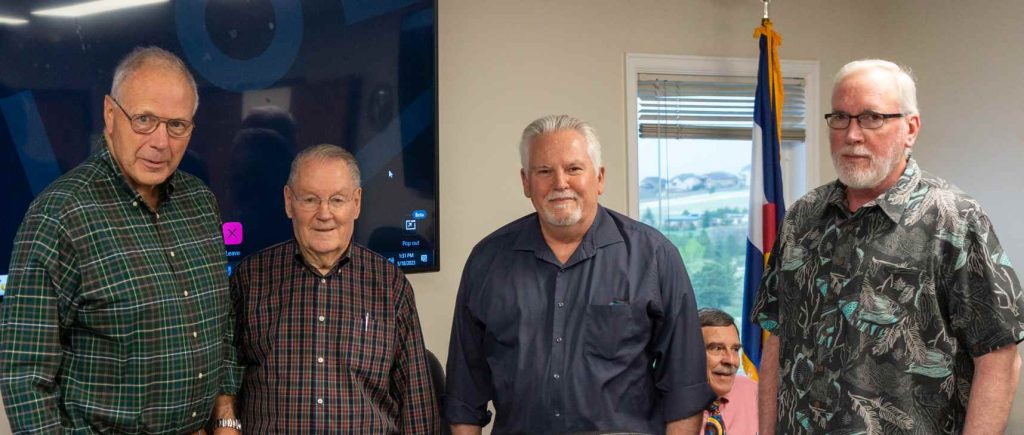
Following the swearing in, the board elected officers. Wayne Vanderscheuere was elected to serve a second term as president. Bill George was elected vice president. Deardorff was elected as treasurer and secretary. George and Deardorff will serve second terms in their respective offices.
The board passed a resolution expressing its appreciation for the service of Director Kenneth Judd, who stepped up to fill a seat on the board vacated by the resignation of Ed Houle when Houle moved out of the district. Judd intended to fill the position until the next election, and that is what he did. Judd had served on the DWSD board previously, and Vanderschuere commented on Judd’s contributions to a range of issues, including district financing, the preparation of 10 district budgets, the planning of mill levy overrides and fees, and negotiations with surrounding districts.
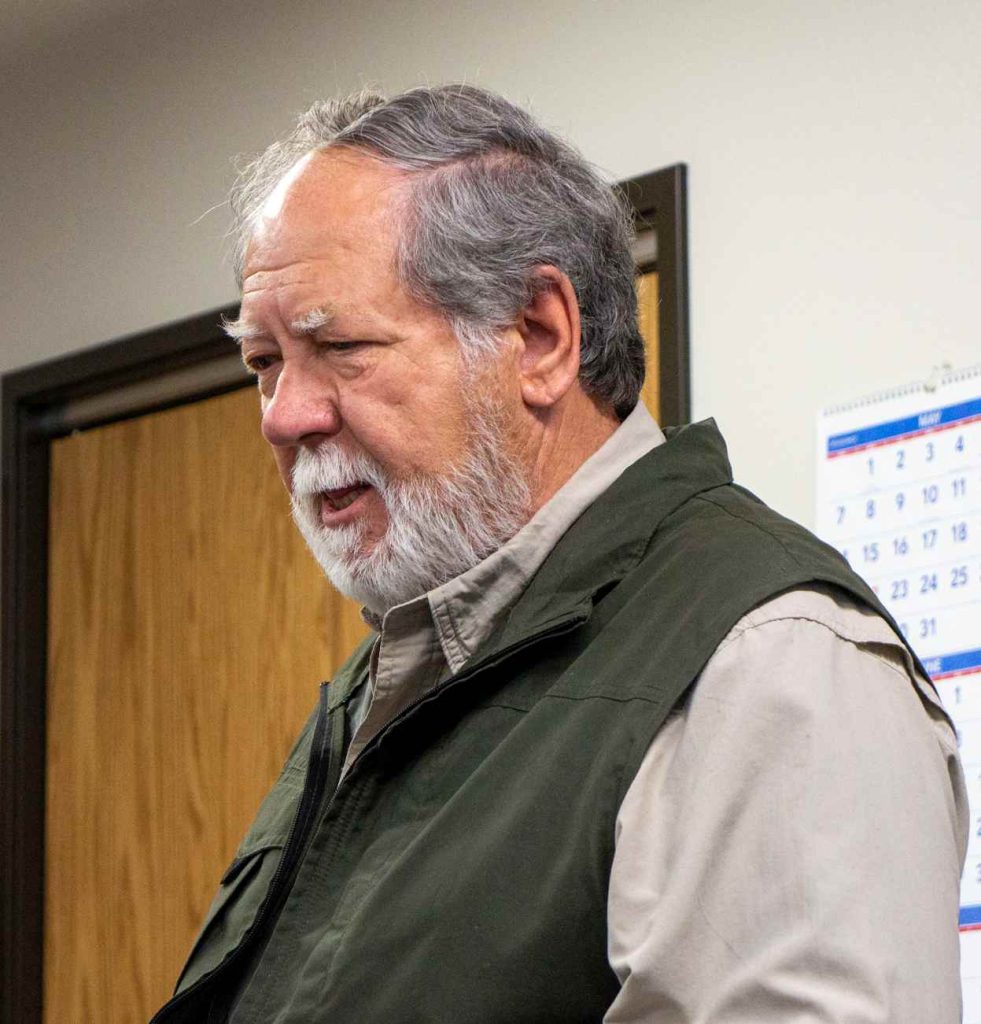
In his farewell remarks, Judd encouraged the board to understand it serves future generations as well as today’s residents.
ASR feasible, study shows
Joel Barber, a hydrogeologist, and Allan Foster, a water quality expert, both of LRE Water, presented the results of a study of ASR commissioned by DWSD. ASR involves pumping excess surface water into aquifers using an existing well, which is later extracted from the same or a remote well and delivered to customers. ASR minimizes water losses to evaporation compared to storage in a reservoir and is valuable in extended droughts.
Barber explained that a study done in 2013 showed aquifers were depleting and identified this as a risk to long-term water supply. As water levels in aquifers decline, it becomes more expensive to use wells as a source of water. Three DWSD wells were tested between 2019 and 2022, and their water levels were seen to be dropping from 4 to 24 feet per year, resulting in pumping cost increases between $200 and $1,000 per year per well. Barber predicted 300 feet of decline in the aquifers that supply DWSD over the next 30 years given current usage. This is a regional trend, Barber said.
Barber estimated that implementing ASR would provide $1,000 in savings per year per well due to a potential 20-foot rise in water level. He estimated construction of a pilot ASR facility at $455,000. Cost of an acre-foot of stored and extracted water would start at $2,500 during the first year of implementation and would decline to a steady state of $800 per acre-foot by year 11 of implementation.
Barber said only treated water would be stored in aquifers, and DWSD’s treated water was compatible with the water currently in DWSD’s aquifers.
Three agencies are involved in the permitting process for ASR implementations, Barber said: the Colorado Department of Public Health and Environment, whose goal is to protect the health of customers; the Division of Water Resources, which addresses water quantity issues; and the Environmental Protection Agency, which focuses on water quality. There must be a single permit holder that is liable for risks, Barber said.
The presentation included a proposed 10-year implementation road map that includes a pilot phase from 2023 to 2028, a build-out and integration phase from 2028 to 2033, and an ongoing implementation phase beginning 2033.
Barber and Foster recommended DWSD move forward with an ASR pilot and pursue options for regional cooperation. ASR would give DWSD a storage option within the district that DWSD would control. Triview Metropolitan District, DWSD’s neighbor to the west, was a likely choice for collaboration, they said. They recommended that a third-party consultant administer the program if more than one district participates. They discussed the possibility of grants from the U.S. Bureau of Reclamation or the Colorado Conservation Board.
The board took no specific action following the presentation, but the consensus was that it would continue to work with LRE to implement ASR.
Audit shows financial health
Tom Sistare of Hoelting & Co. Inc. gave the board the results of DWSD’s 2022 finances. Sistare described DWSD as “a district that is in good shape, run by a healthy board.”
Sistare said the field work for the audit was done at the DWSD in mid-March. He questioned the staff, looked at the books and did walkthroughs of internal controls. The audit procedures were based on the results of his investigation.
Sistare gave a clean report on the district’s internal controls and an unmodified or clean report on the district’s financial statements.
Sistare said the DWSD’s total net position, or equity in the district, had increased by $1.6 million from 2021.He noted capital expenditures were up $2.7 million compared to the previous year and 2022’s tap fees were one-third of the previous year, an indication of less new construction in DWSD’s service area.
Vanderschuere asked about the impact the funds DWSD has received from the American Recovery Plan Act would have on the district’s finances. Sistare said those funds would require a grant-specific audit that drills down on compliance with federal regulations and internal controls. He recommended reviewing the district’s compliance with federal procurement policies. Hodge pointed out DWSD’s procurement procedures were recently reviewed and updated for federal compliance.
Sistare told the board he would file the audit report with the state as required.
RFQ template approved
Hodge said federal policies require the district to use a standard request for qualification (RFQ) form when contracting for professional engineering and specialized consulting services. A draft form was included in the board packet that specifies evaluation criteria such as relevant experience, firm capabilities, technical qualifications, and quality of the submittal.
DWSD Attorney Linda Glesne said her firm was familiar with this federal standard and could advise the district.
Hodge said that the district will implement radium removal using hydrous manganese oxide, and the template would be used during the bidding process to hire the engineers needed for that project. He added that when the district was working with state guidelines, an RFQ was not needed.
The board voted in favor of a motion to refine the RFQ form for final approval in June.
Hodge appointed to Operations Committee
The board voted unanimously in favor of a resolution naming Hodge as the DWSD representative on the UMCRWWTF Operations Committee. The committee oversees the operation of the waste treatment facility that DWSD currently shares with Triview Metropolitan District, Forest Lakes Metropolitan District, and Academy Water and Sanitation District.
Bid awarded
Hodge asked the board to approve a bid from KR Swerdfeger Construction LLC to construct a concrete vault for well 16A that will contain flow control, surge and pressure and waste pumping valves, as well as some additional pipeline, at a price of $355,143. The board voted unanimously to award the bid as Hodge requested.
**********
The next meeting is scheduled for June 12 at 1:30 p.m. Generally, board meetings are held the third Thursday of the month at 1:30 p.m. and include online access; call (719) 488-3603 or access www.donalawater.org to receive up-to-date meeting information. The district office is located at 15850 Holbein Drive, Colorado Springs.
James Howald can be reached at jameshowald@ocn.me. Jackie Burhans can be reached at
Other Donala Water and Sanitation District articles
- Donala Water and Sanitation District, June 12 – Positive audit report; inconsistent waste treatment numbers (7/3/2025)
- Donala Water and Sanitation District, May 5 – Directors sworn in; district offices temporarily closed (6/7/2025)
- Donala Water and Sanitation District, April 17 – Workshop covers finances, water supply (5/3/2025)
- Donala Water and Sanitation District, Mar. 27 – New water and sewer rates take effect (4/5/2025)
- Donala Water and Sanitation District, Feb. 20 – Voters remove term limits (3/1/2025)
- Donala Water and Sanitation District, Jan. 16 – Board passes housekeeping resolution (2/1/2025)
- Donala Water and Sanitation District, Nov. 21 – State signs off on radium remediation (1/4/2025)
- Donala Water and Sanitation District, Nov. 21 – Board hears rate and groundwater supply studies (12/5/2024)
- Donala Water and Sanitation District, Oct. 10 – Board receives preliminary 2025 budget, considers rate increase (11/2/2024)
- Donala Water and Sanitation District, Sept. 19- -Board continues term limit debate (10/5/2024)